
Eleven in the morning.
The sky has turned indigo, competing with a sun that falls on downtown Maracaibo like a thousand clothes irons.
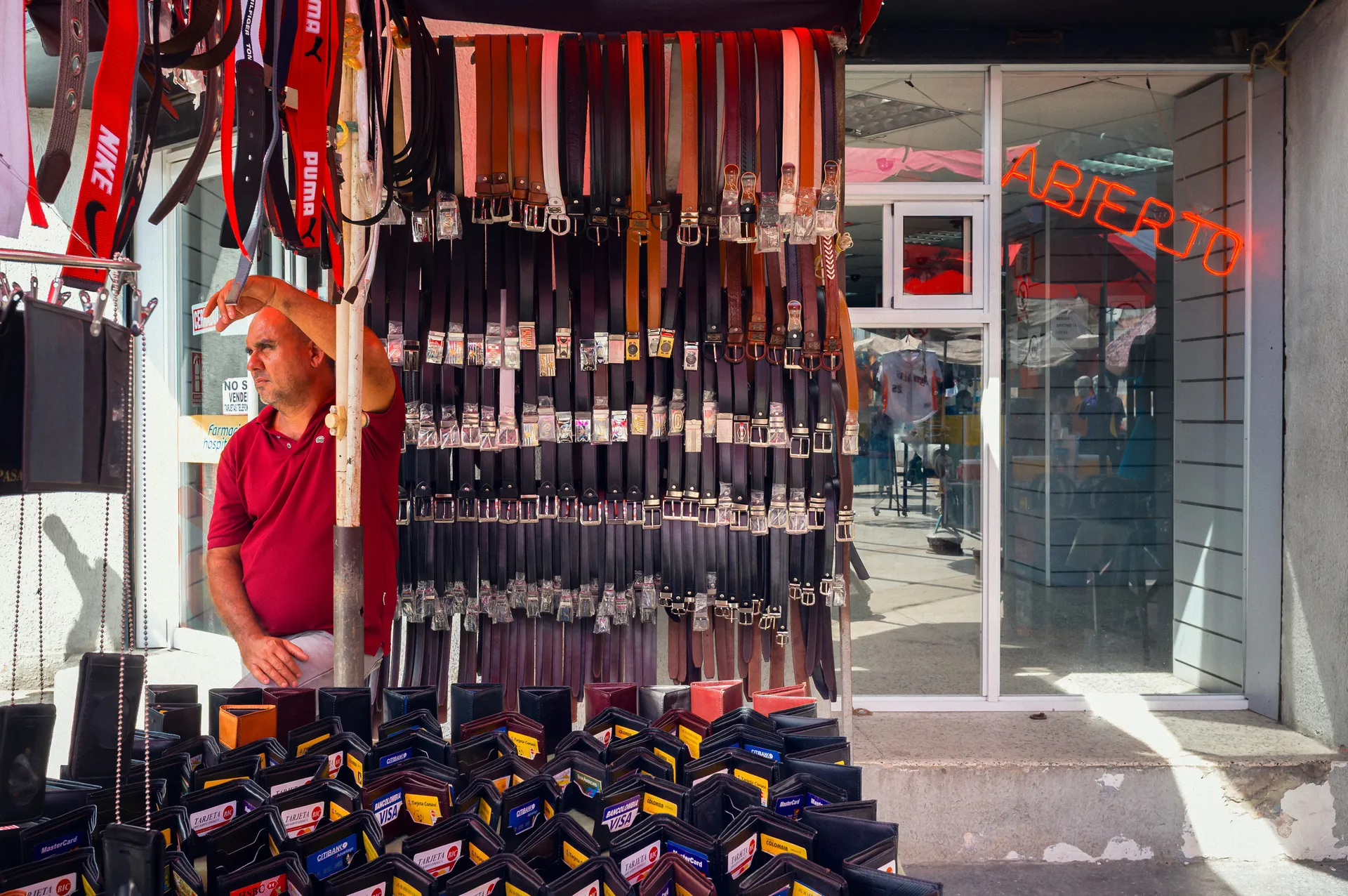
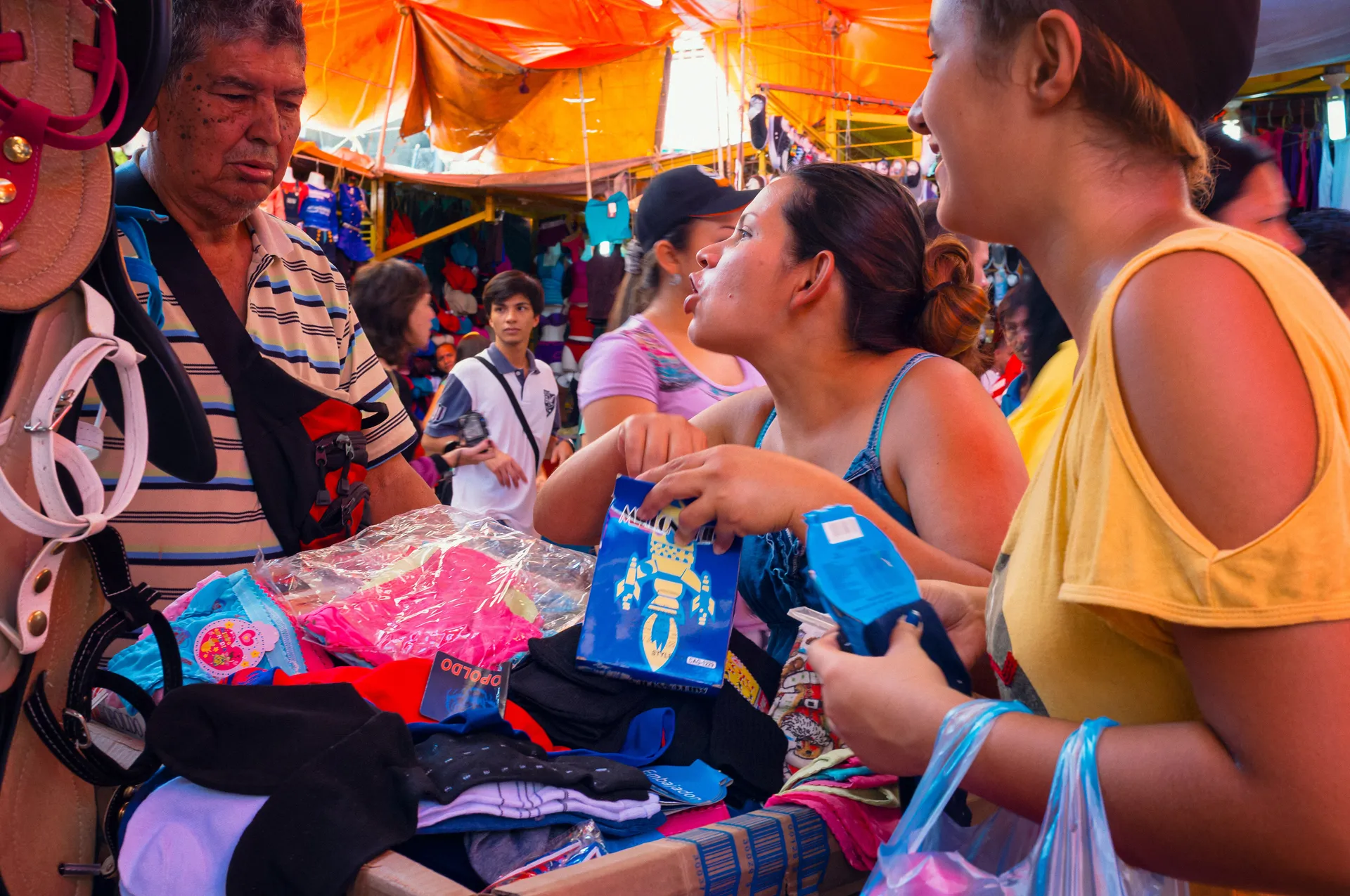
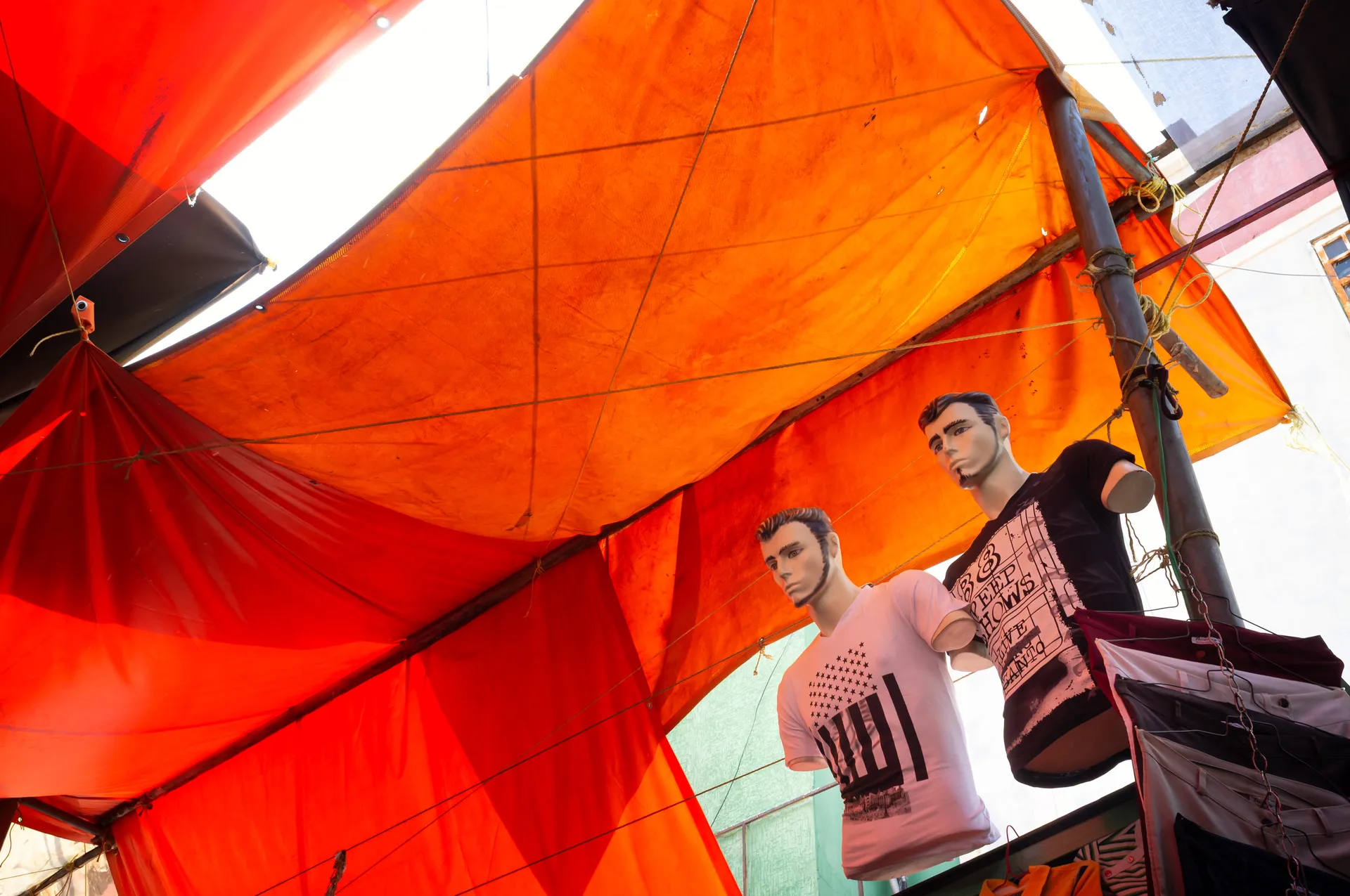
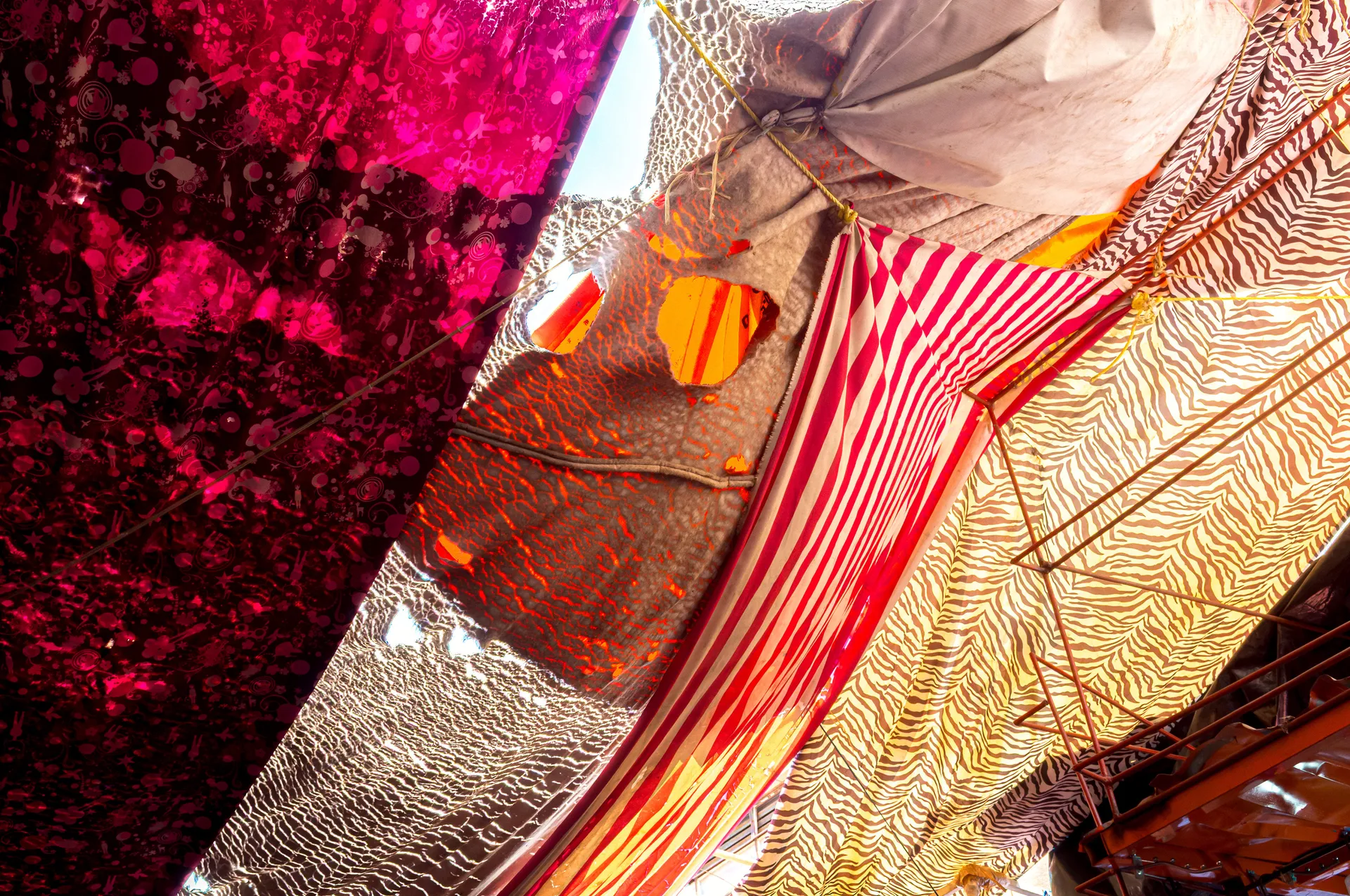
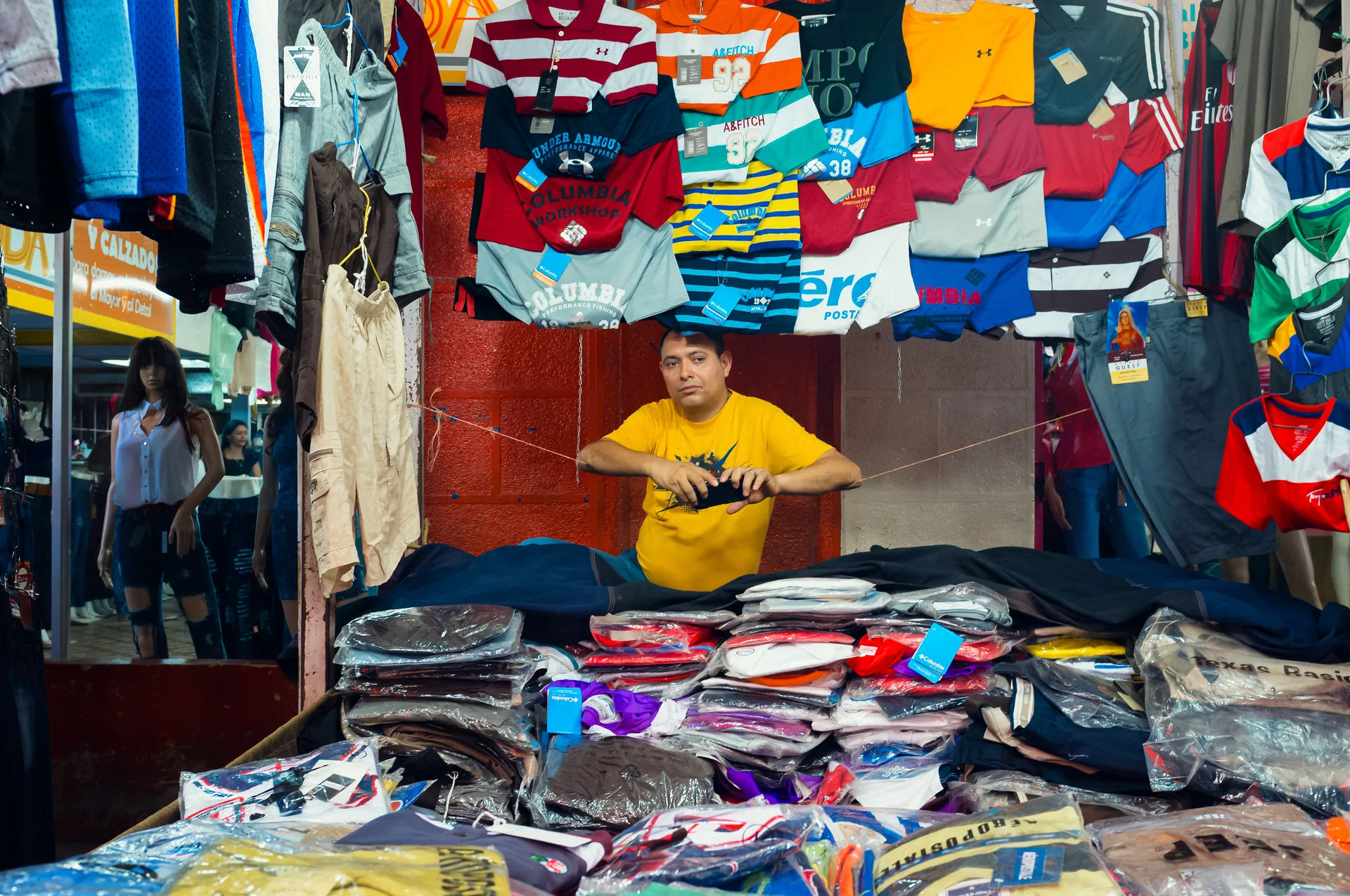
A man steps into the alley and for a few seconds sees nothing: eyes coming in from the white street take a while to make out everything in front of them, like someone waking from a dream. Inside, the city changes substance. A roof of orange tarps filters the midday light and gives it back smelling of new plastic. Hanging clothes draw the maze. Everything sounds at once: a loudspeaker repeating deals, a fan crucified to a beam, frying oil going chas, chas, chas like rain on a tin roof. A la orden, mi amor, says a voice. A la orden, mi amor, repeats another twelve steps further on.
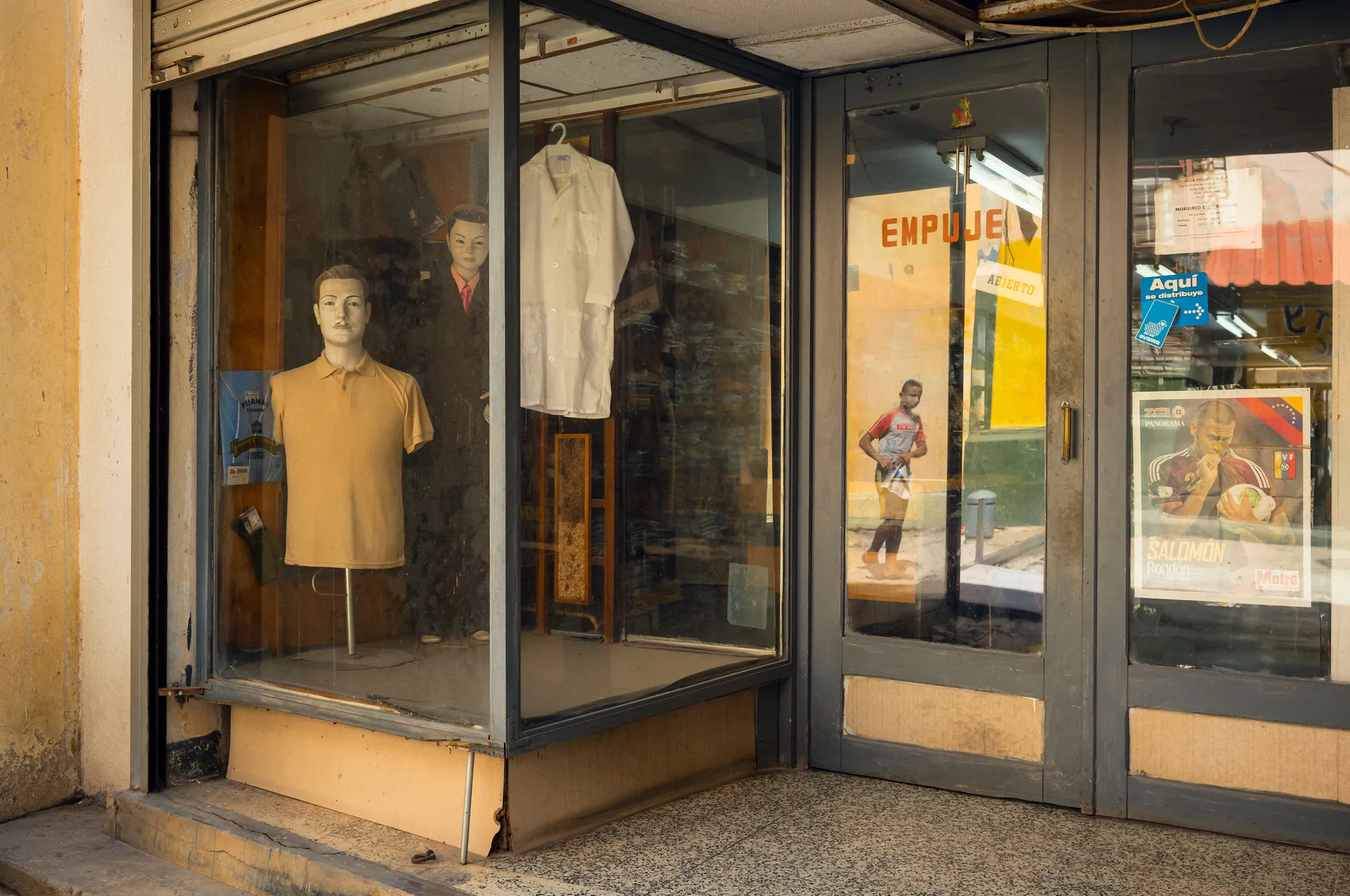
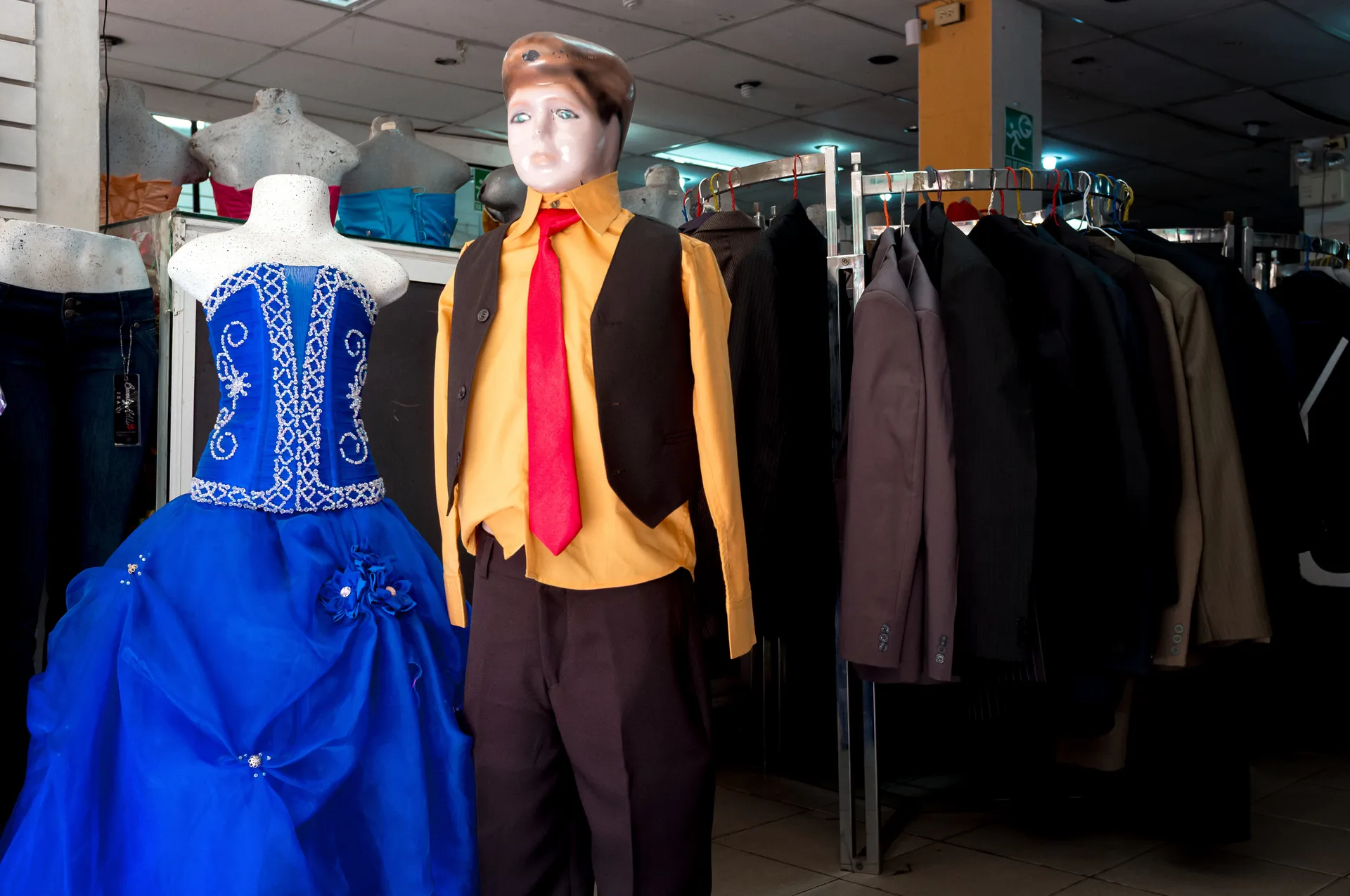
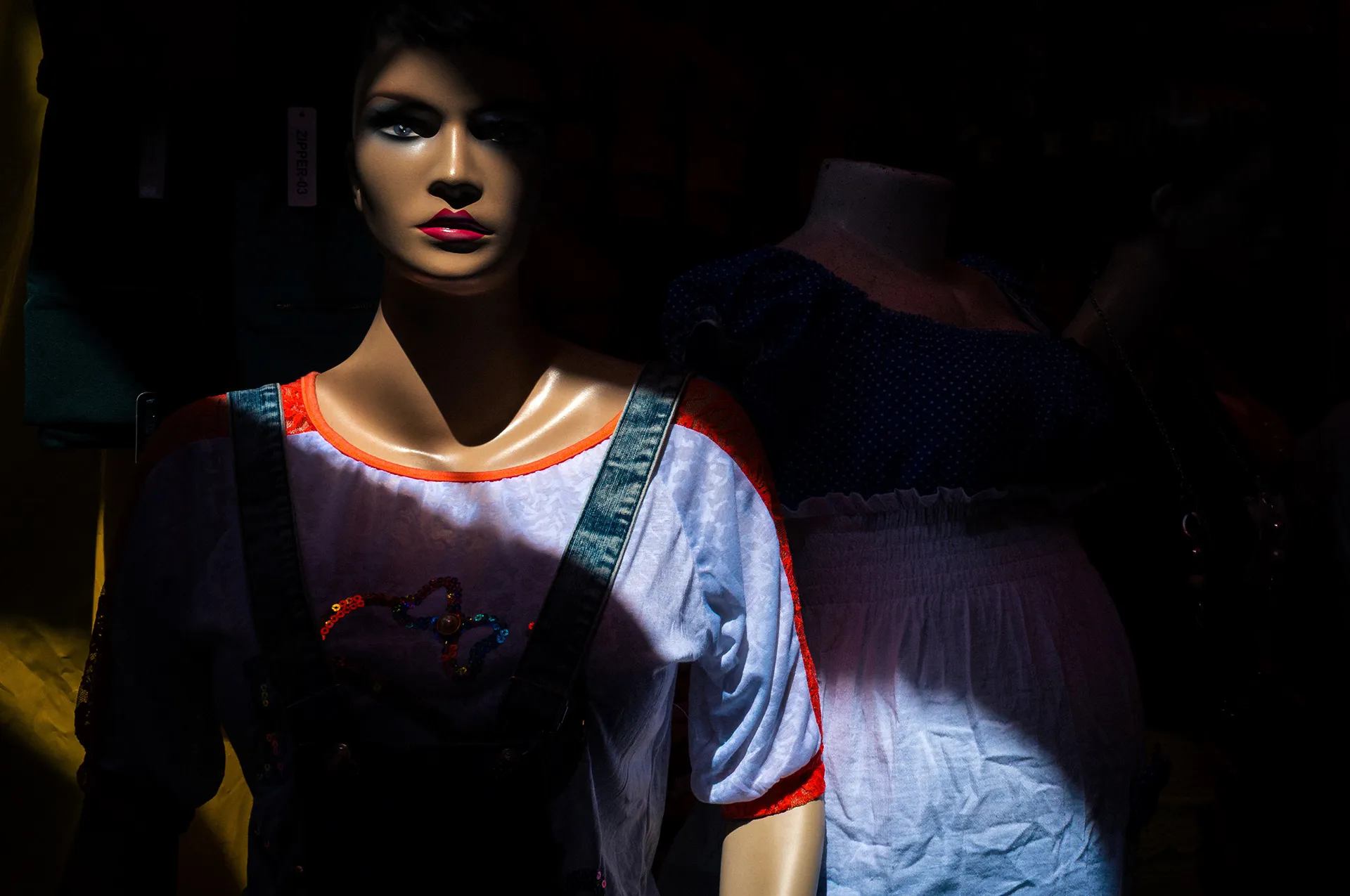
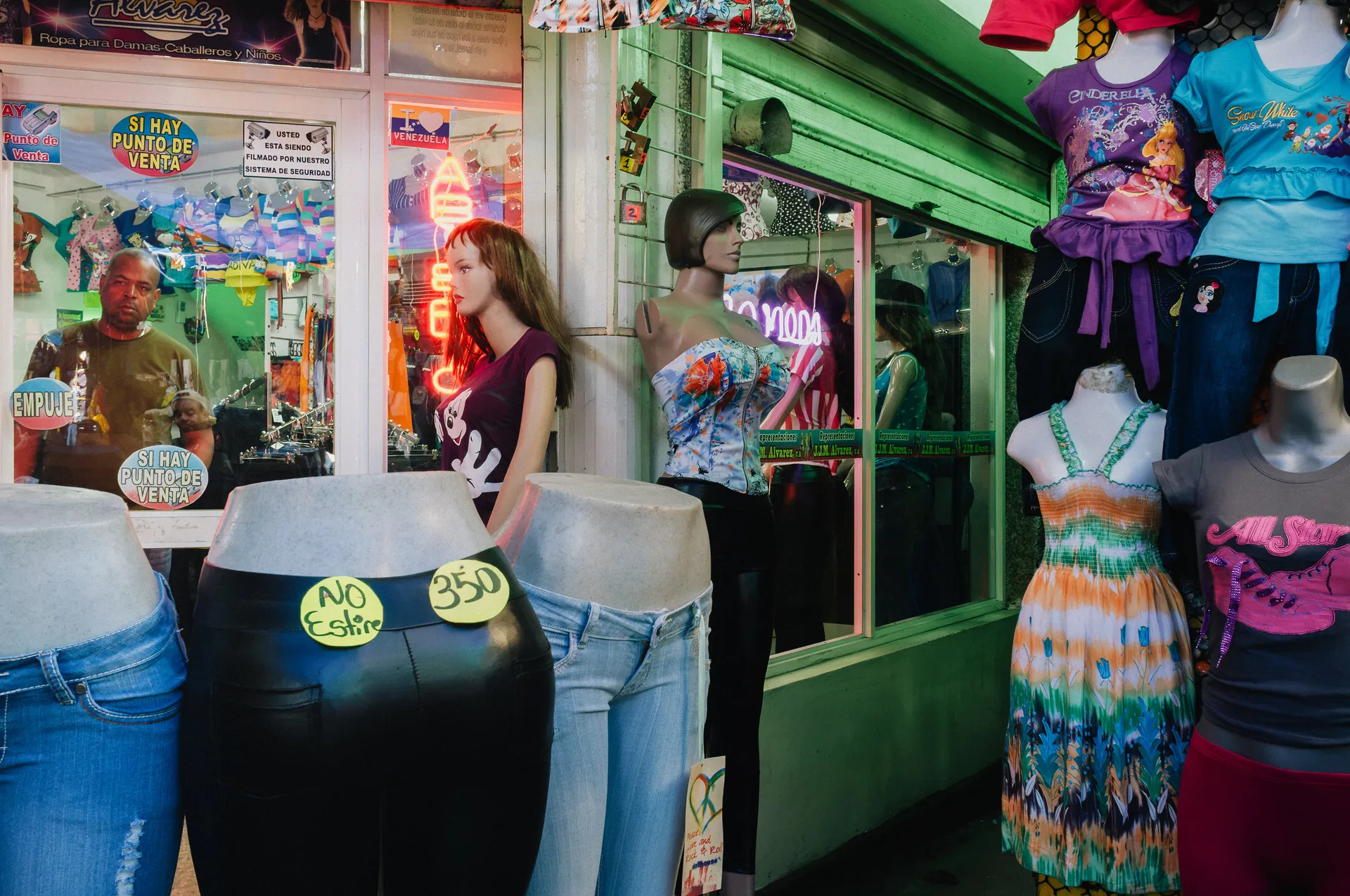
For years the formal shops have been dying. The dusty glass of the shop windows draws hazy borders of fog; a worn mannequin shows a yellow shirt in an almost empty store where a man turns on the light out of habit. When the metal shutters came down, business moved out into the street and greedily built its kingdom there.
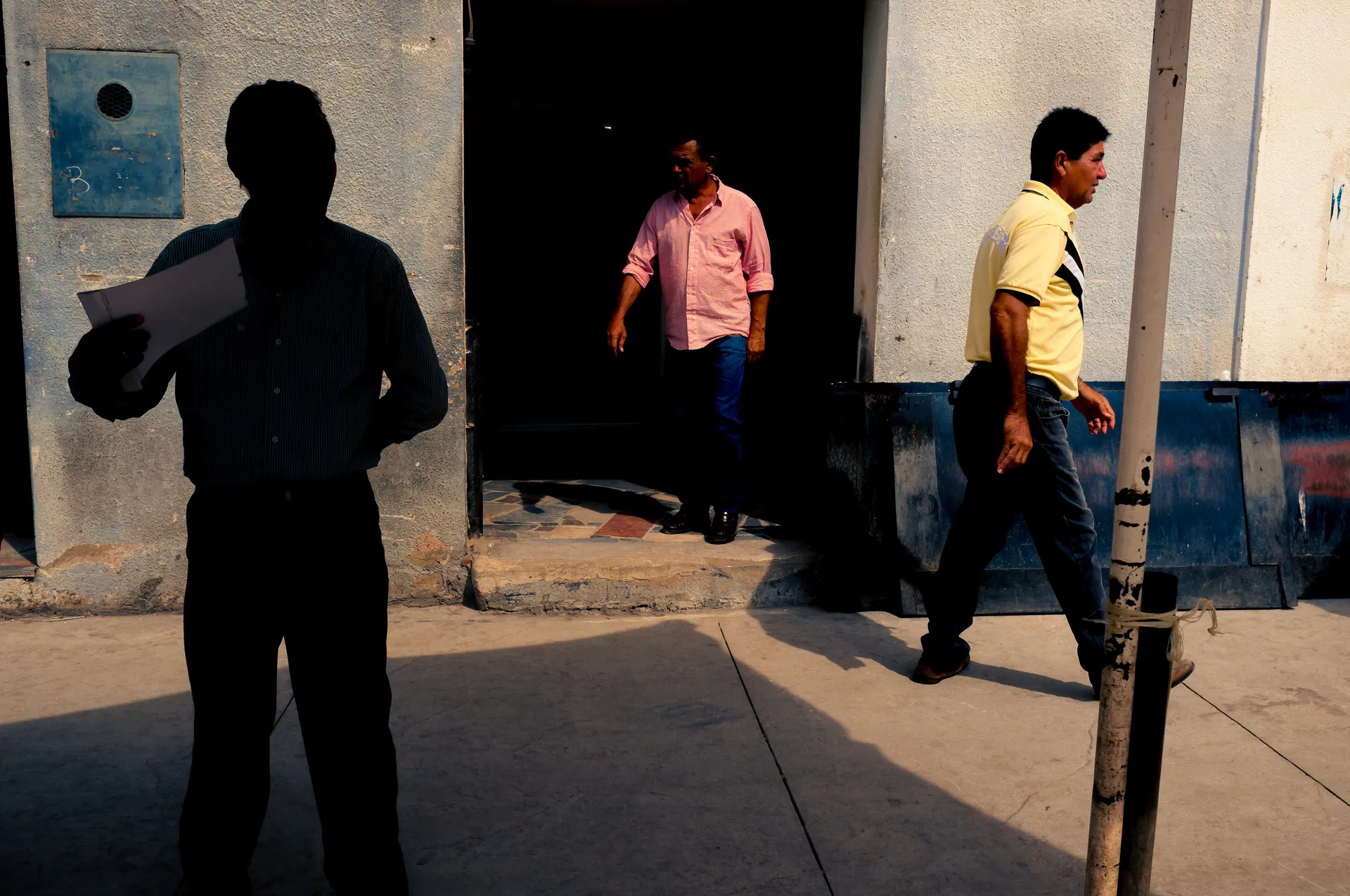
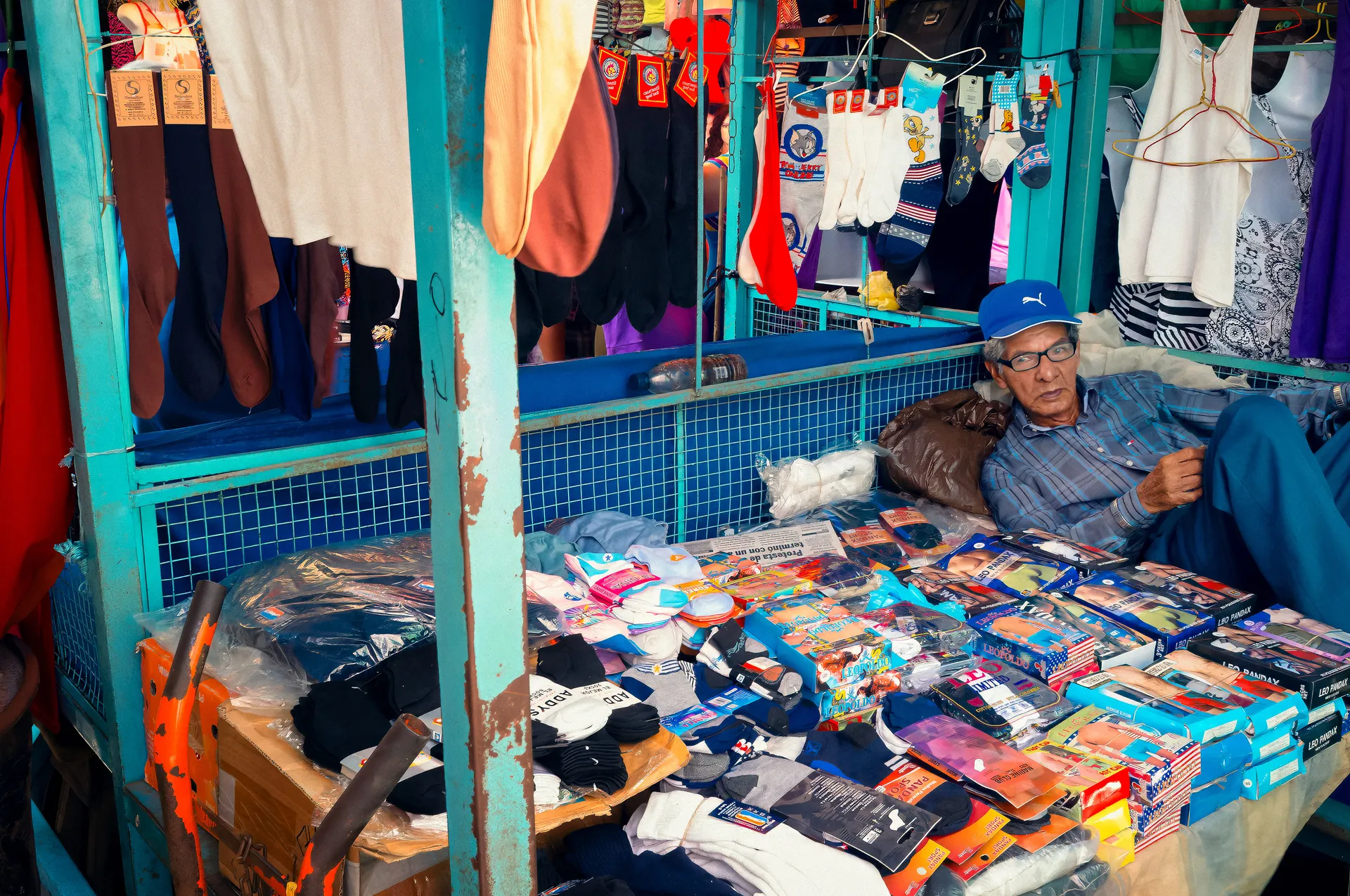
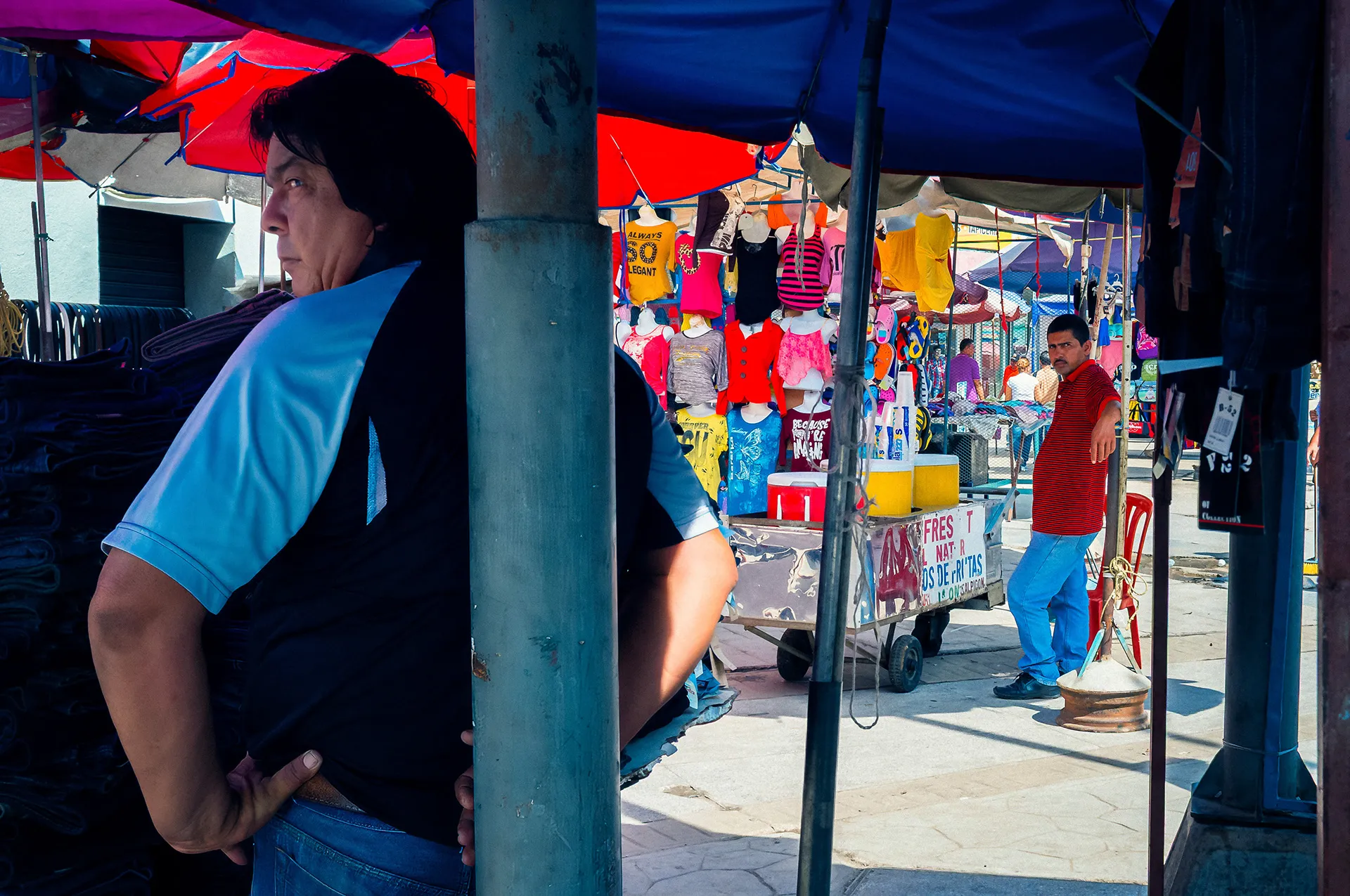
Nobody seems to notice the man with the camera in his hand. Everyone minds their own. People haggle. Money is counted twice. Someone lies on bundles of clothes like a man sleeping on his own land. Nobody looks at anybody.
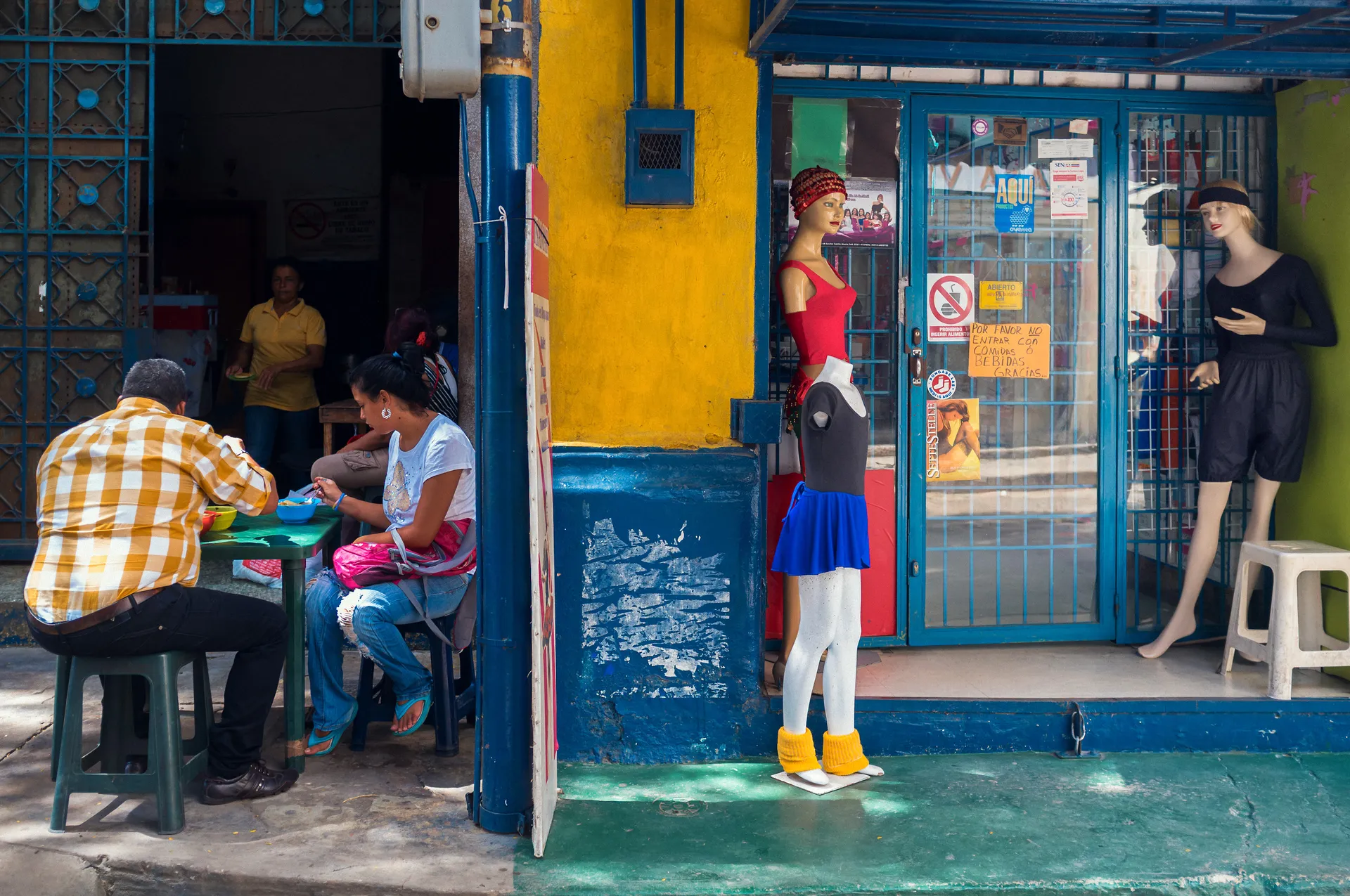
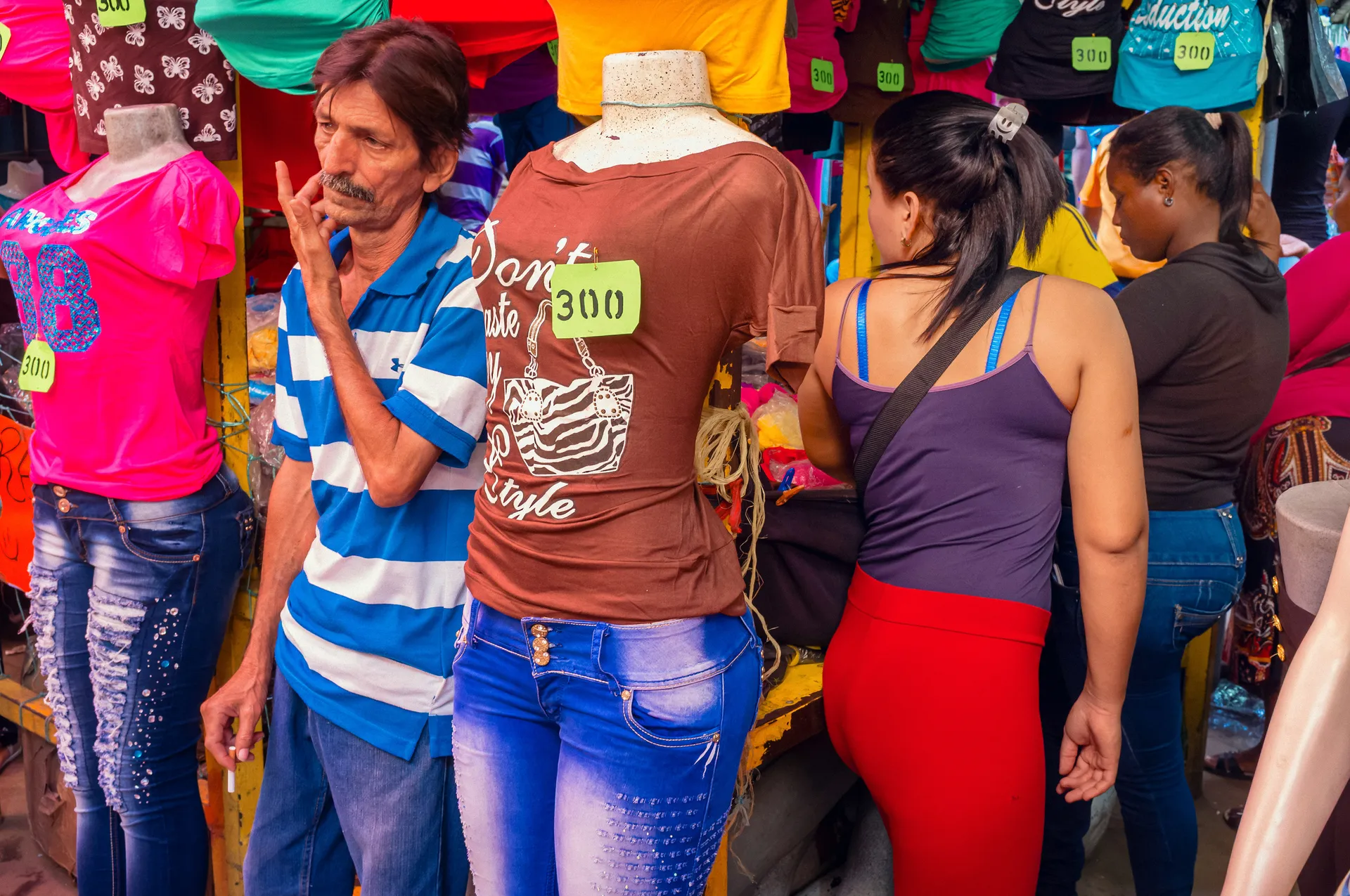
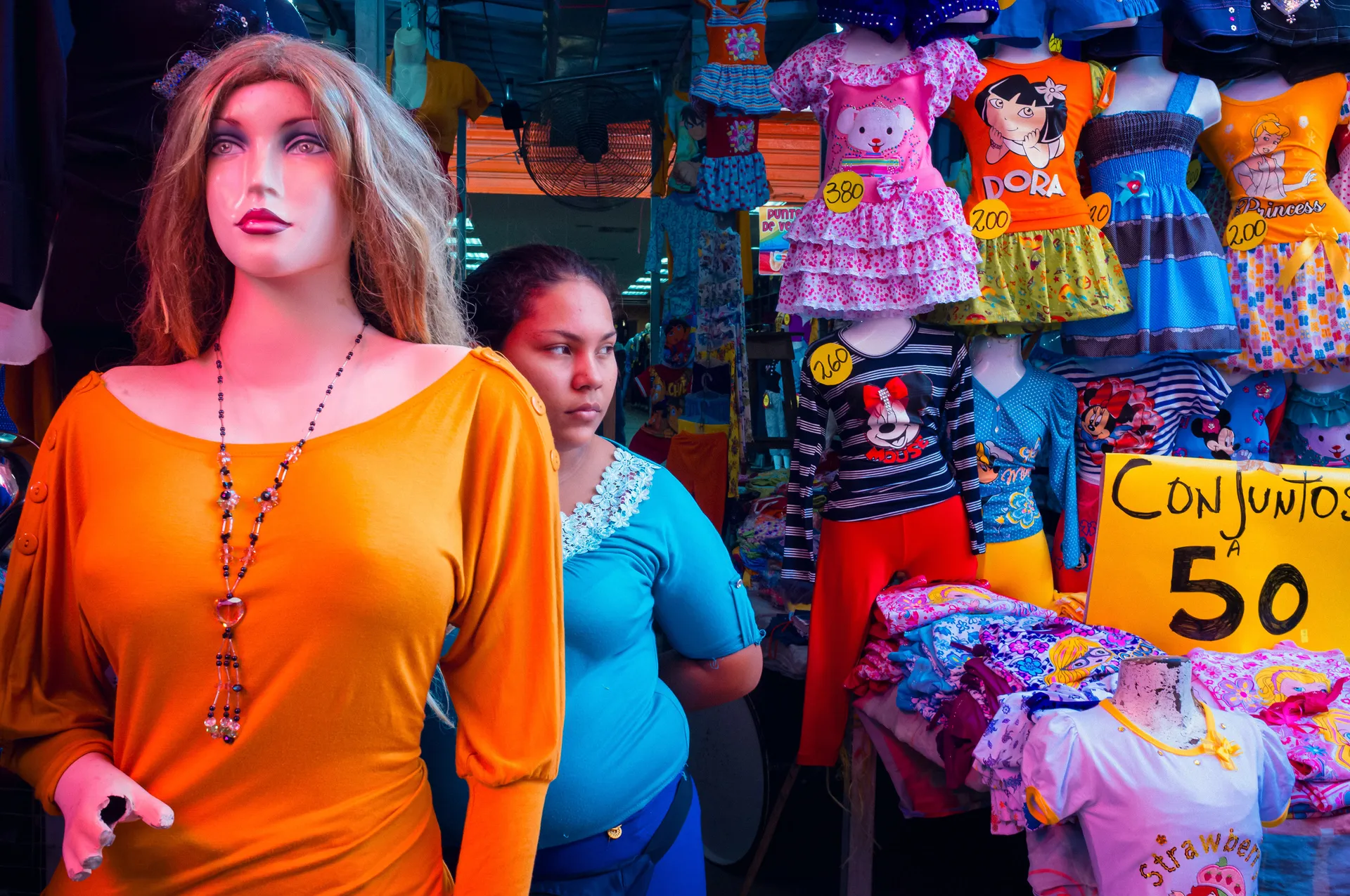
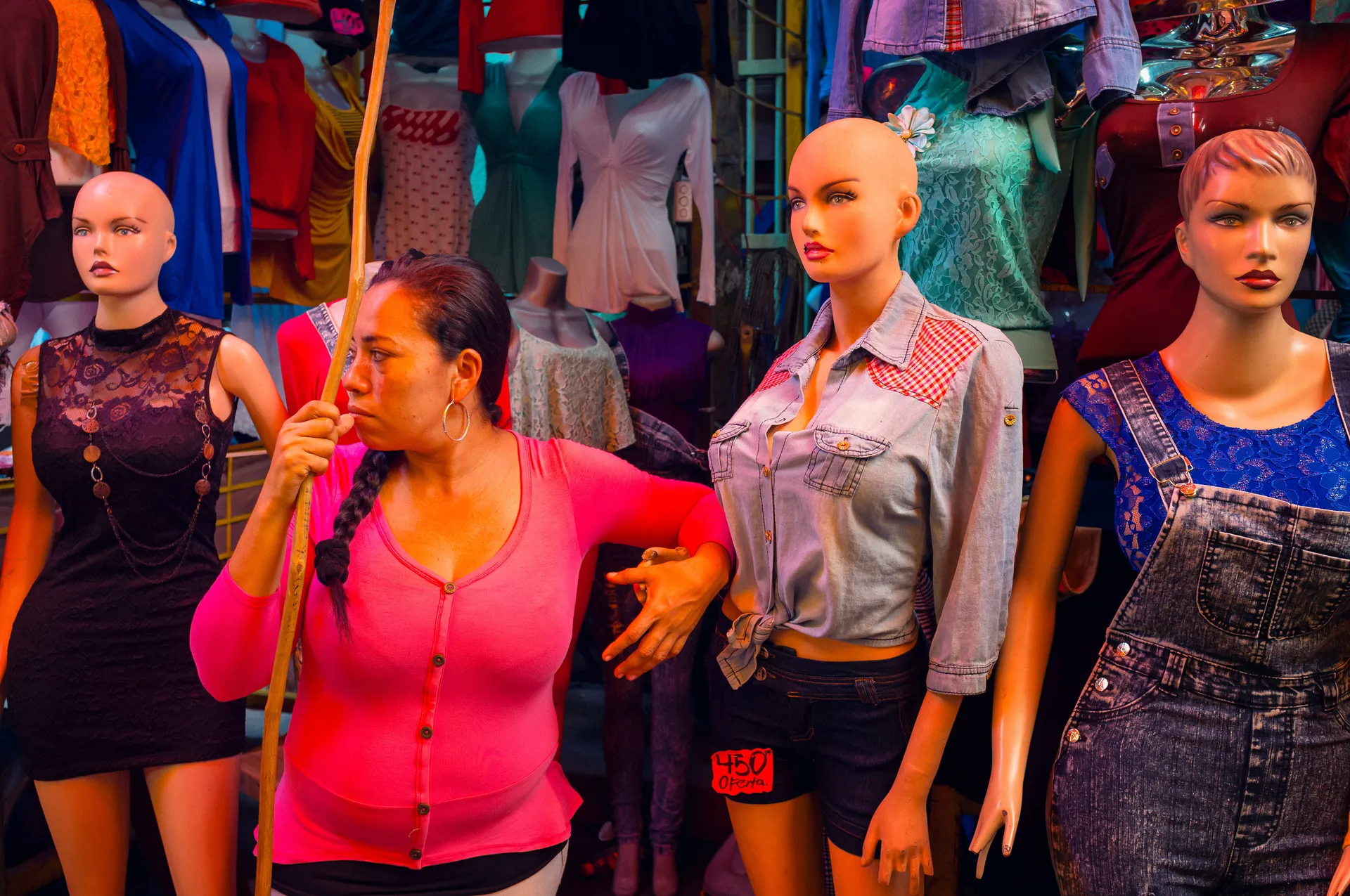
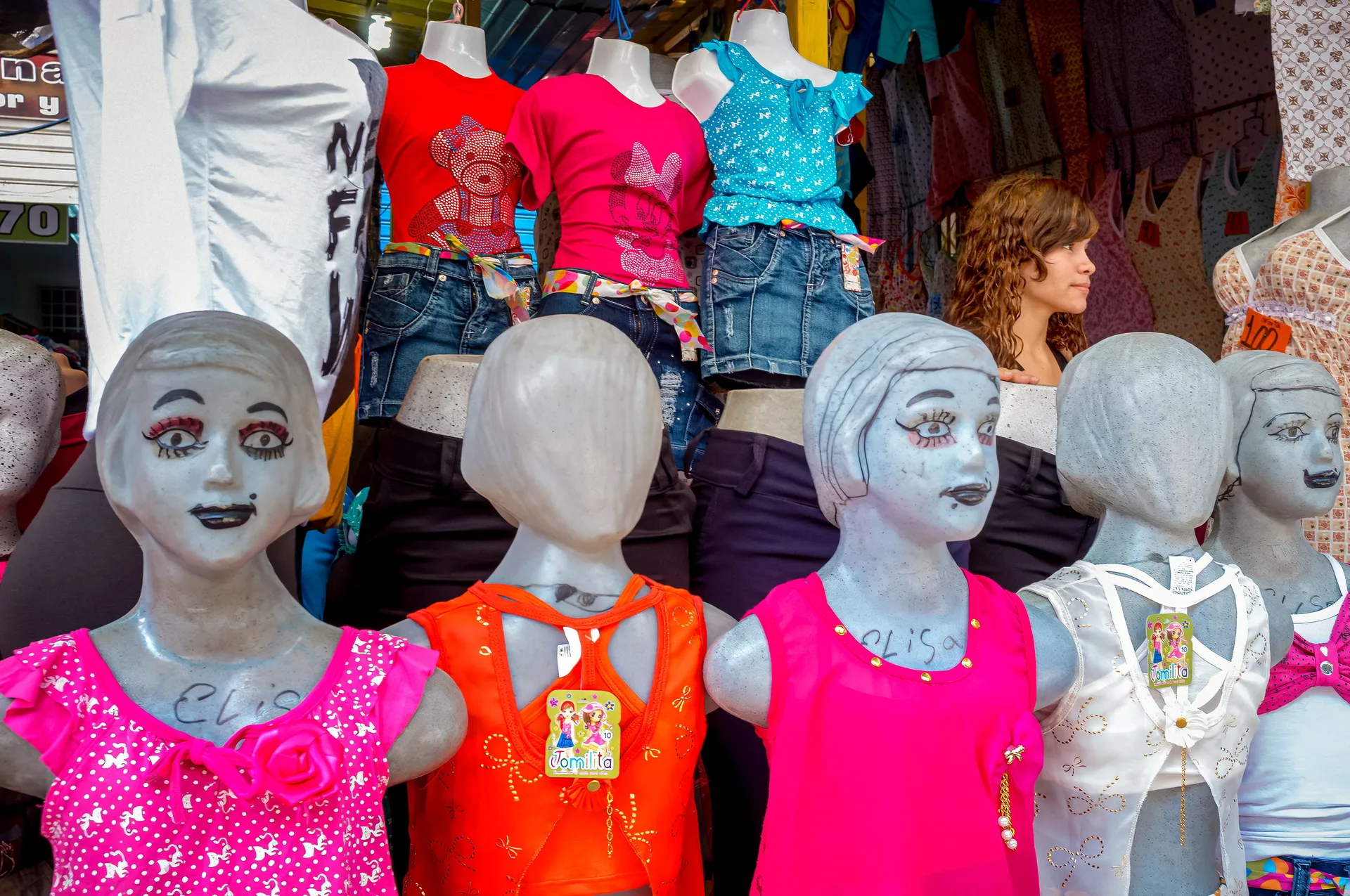
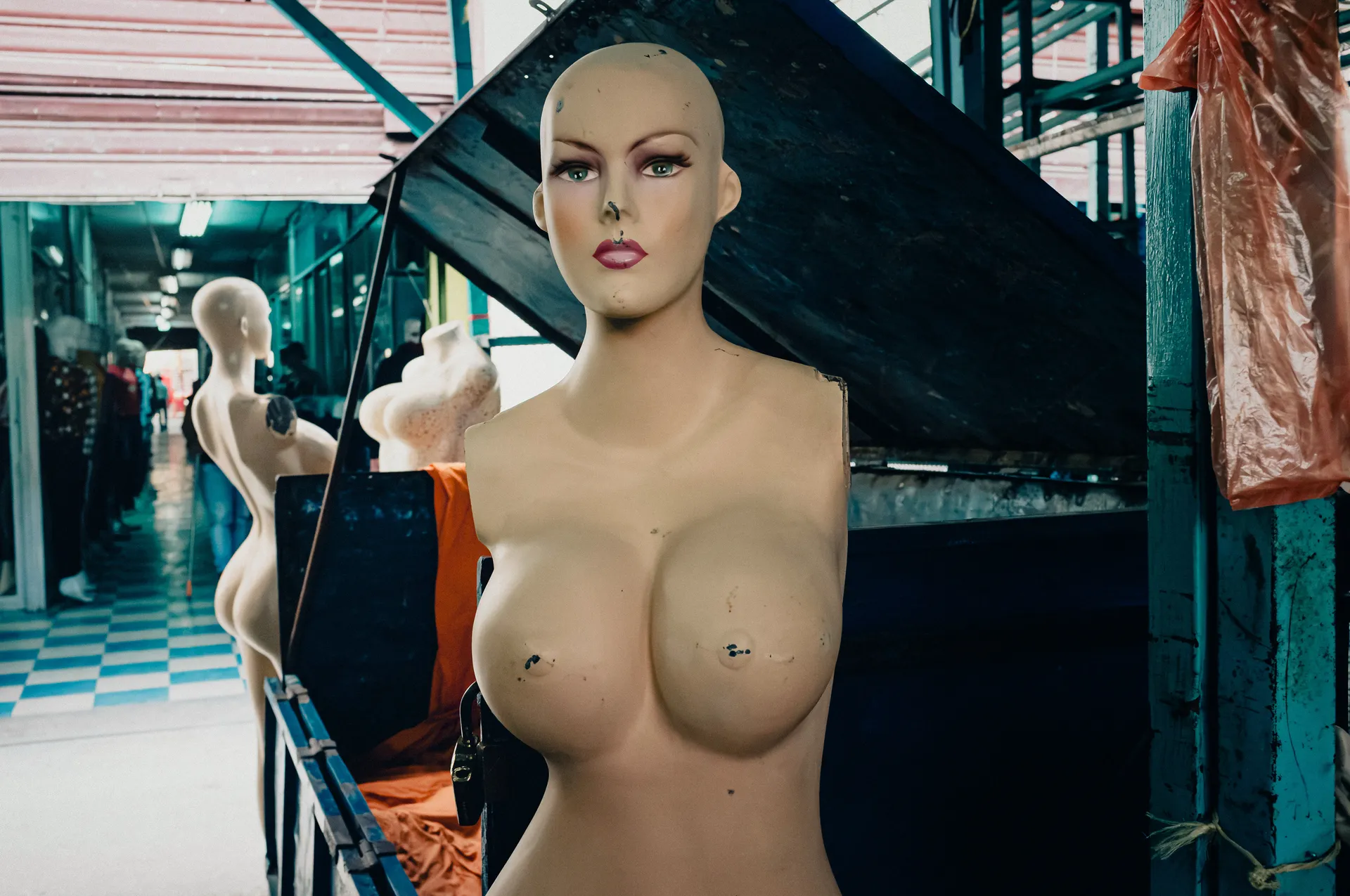
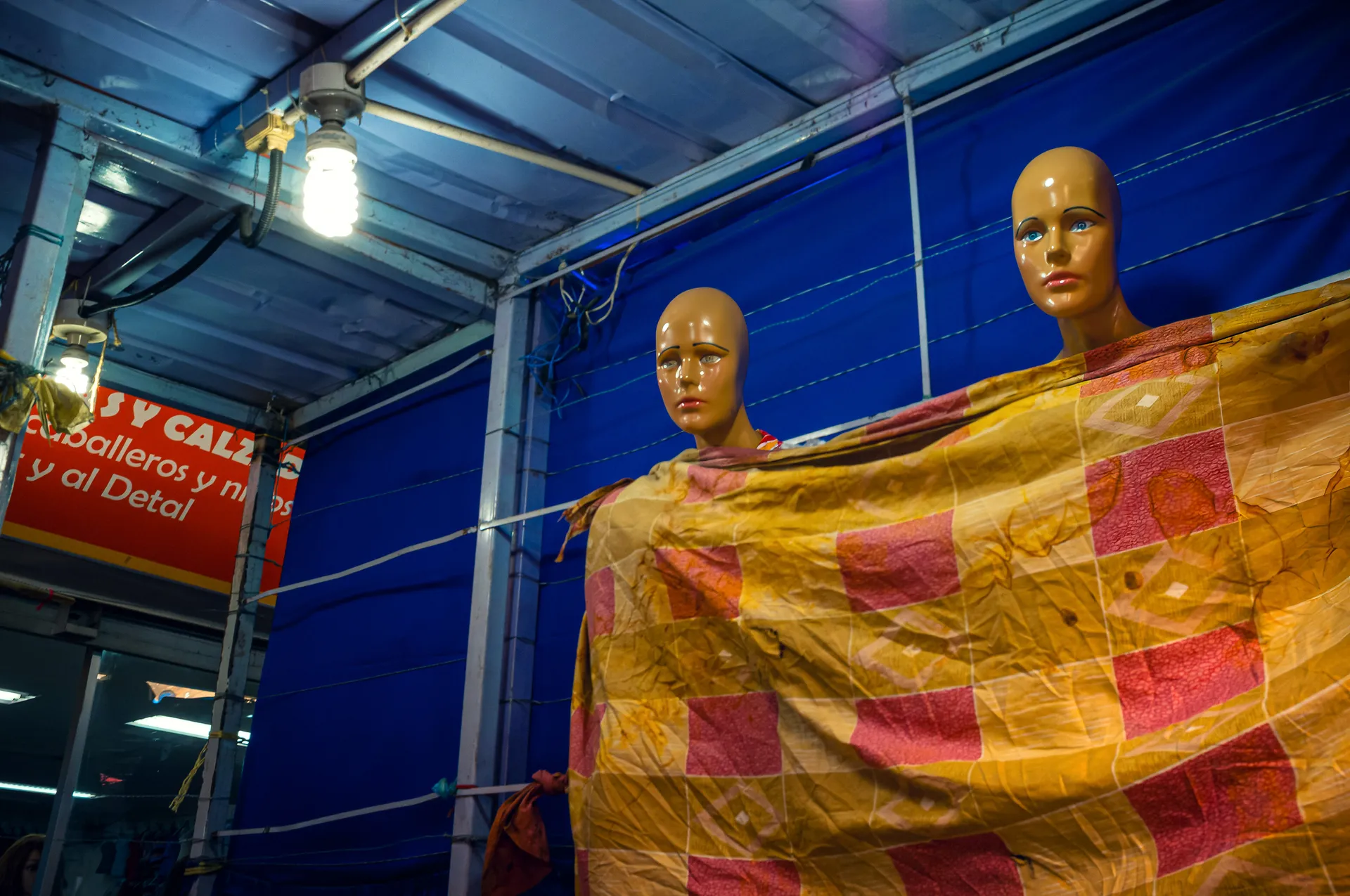
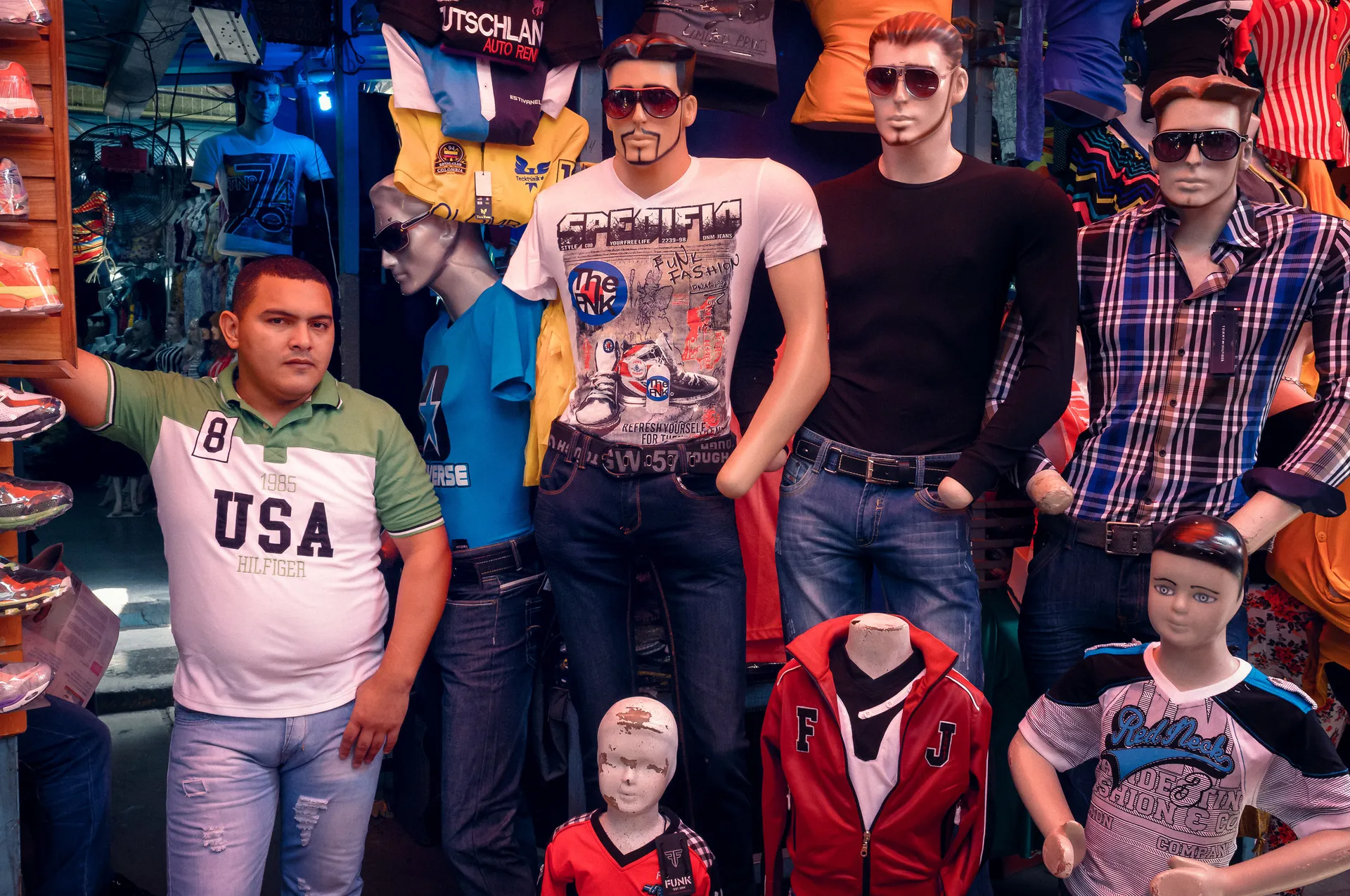
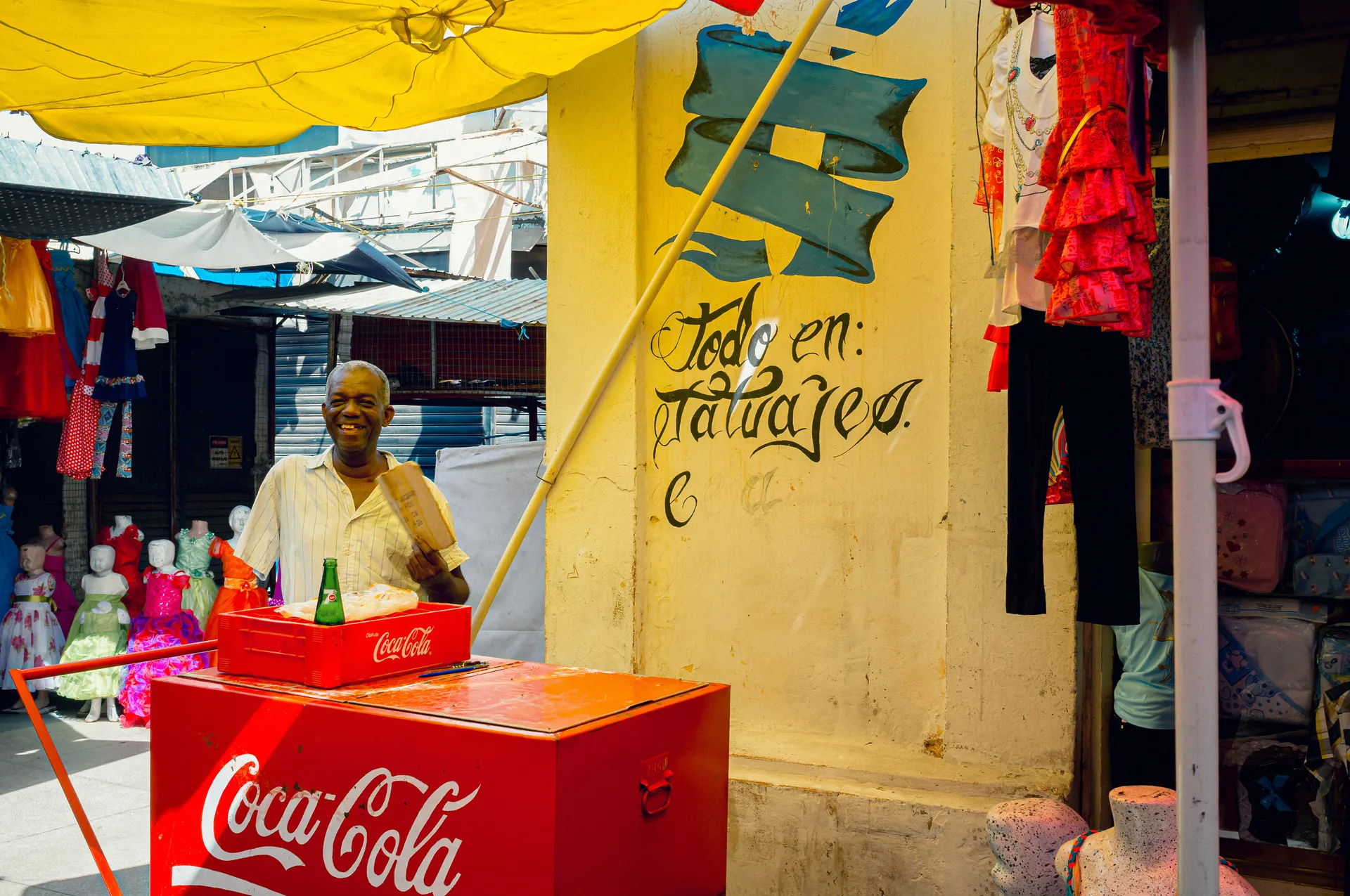
Some finally look at him, but they are not alive. They are blond, with light eyes. Hand-painted lashes. They carry tattooed names from another hemisphere, with measurements that fit no passer-by. One has the name Elisa written in marker on her plastic chest. They don't blink. They have been dazzled since they came out of the box. A stare that also sells.
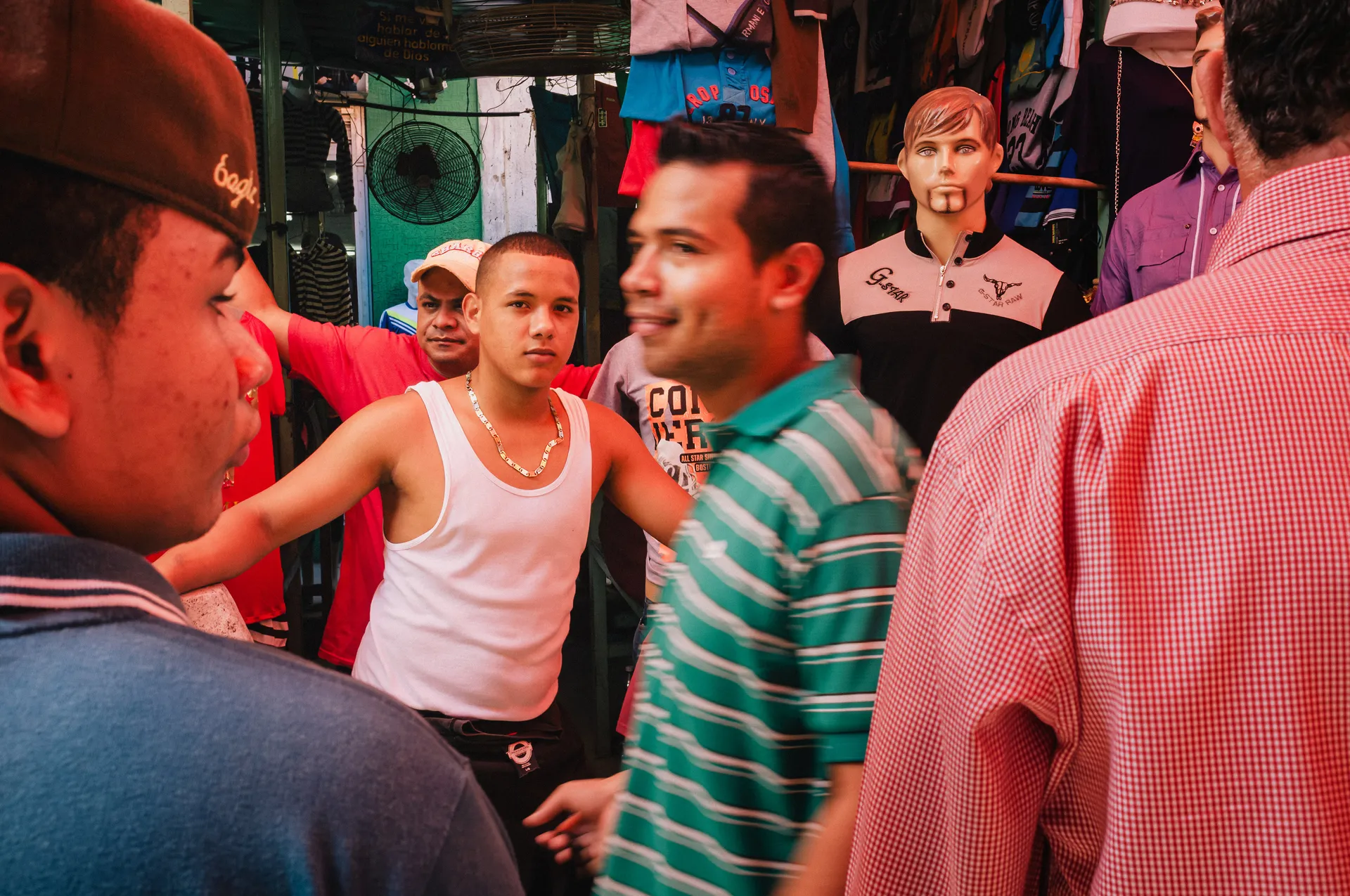
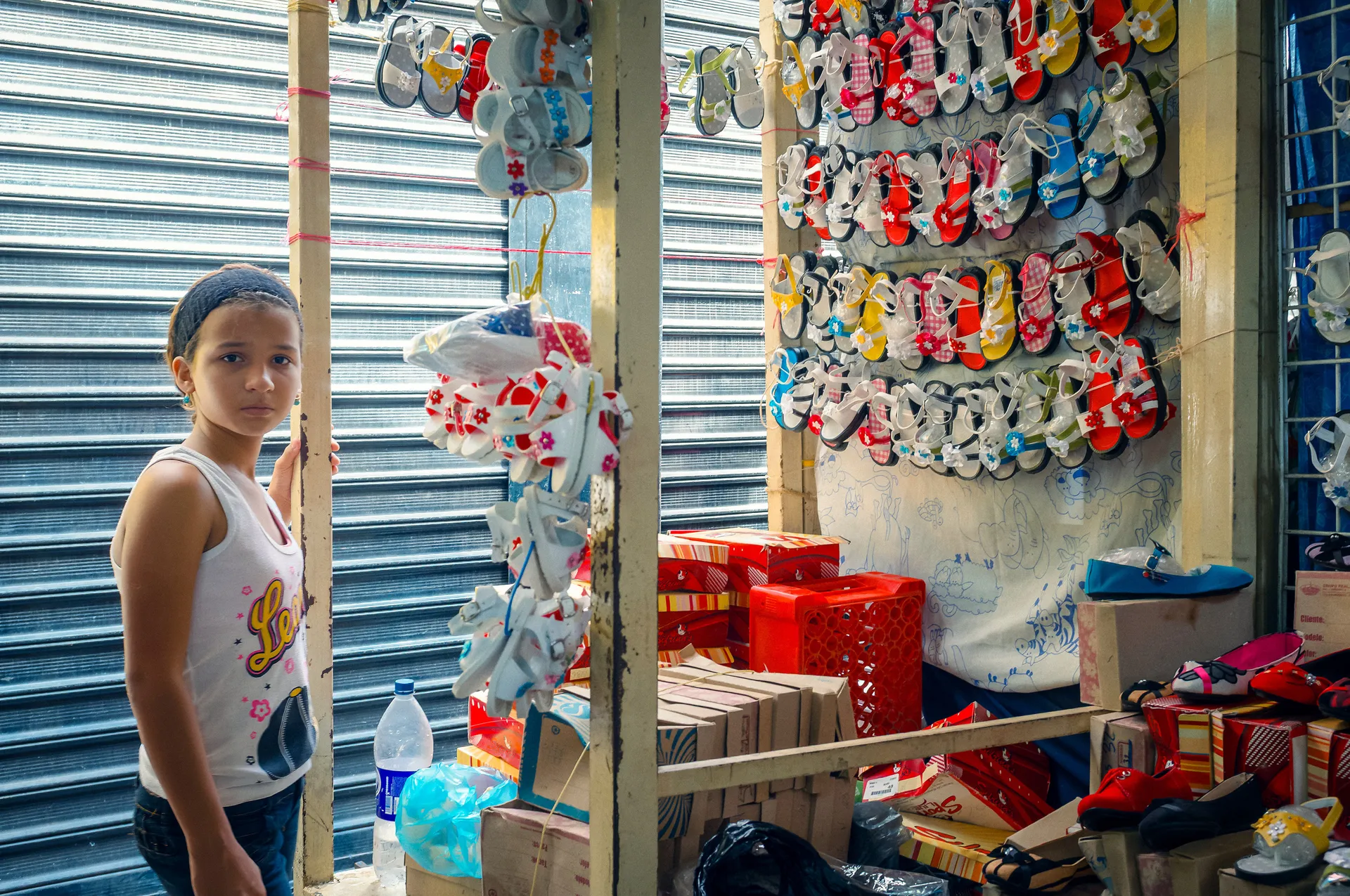
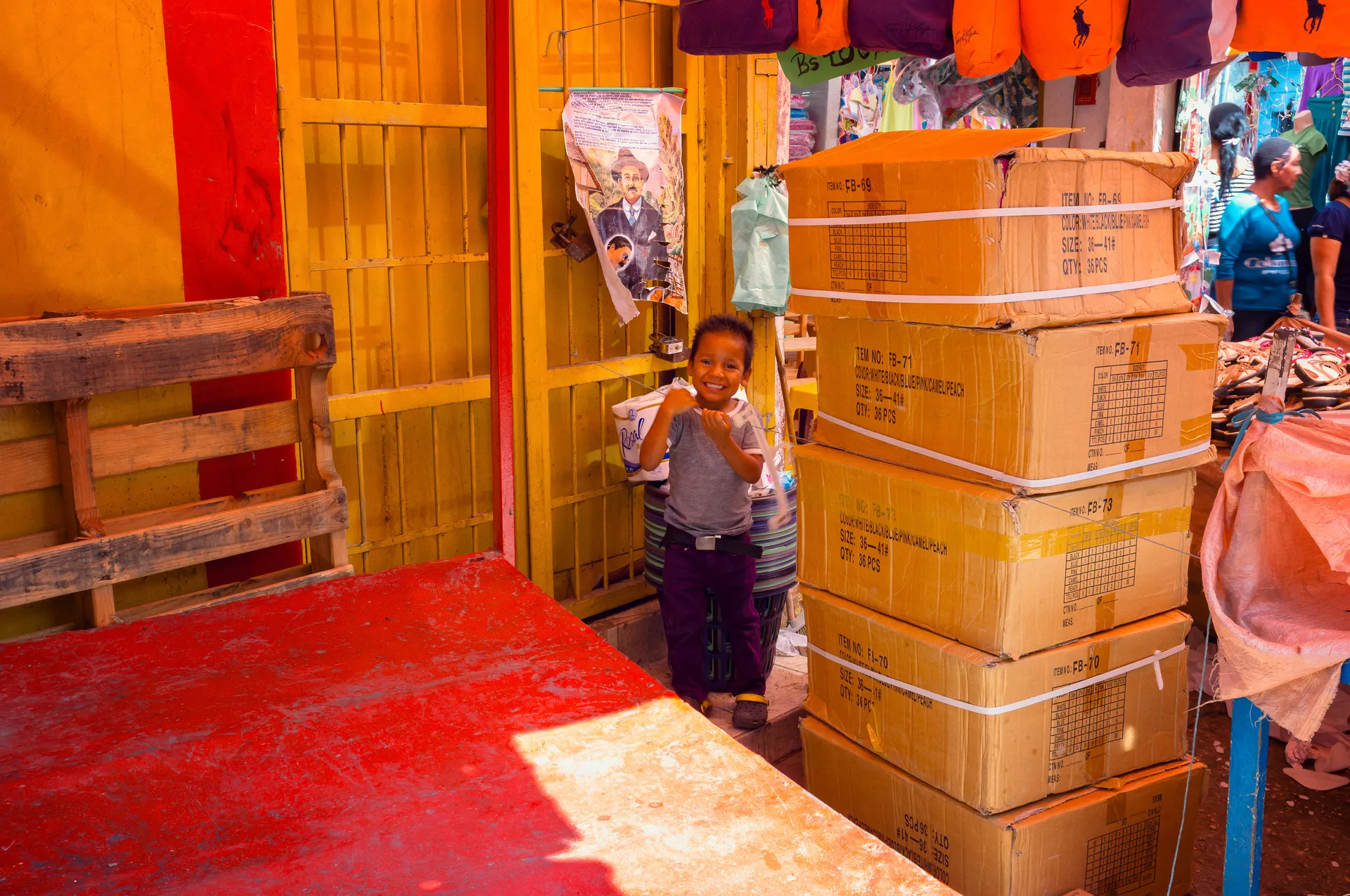
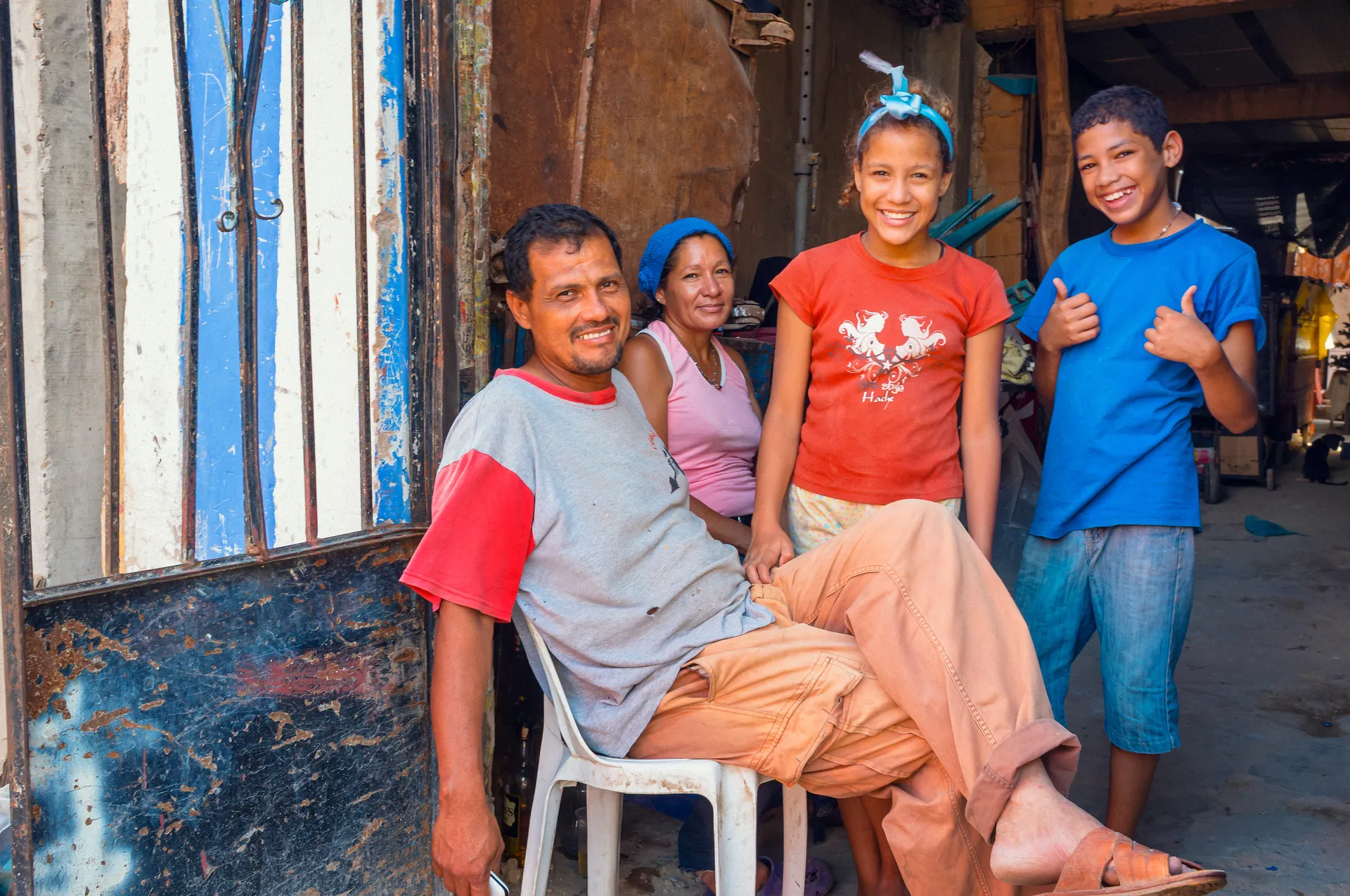
Then the living look. It takes them a while, because their eyes are elsewhere: on persuasion. But at the end of the aisle someone raises his head: a boy in the middle of the crowd, a girl in front of a metal wall, an old man who holds the gaze without getting up from his chair. Further on, at the edges of that territory, a family stops, poses, gives a thumbs-up and "click", the photo comes.
Mid-afternoon. He steps back onto the street with burning eyes and the noise coming and going like the buzz of wasps. For a few minutes the stains of what he was looking at keep floating: imitation names, factory faces, sizes that were only a manner of speaking. Outside, the only thing the country still manufactures is waiting for him: the heat.
Before leaving he turns around. In the alley nobody squints. He leaves with the suspicion that the only one dazzled was him.
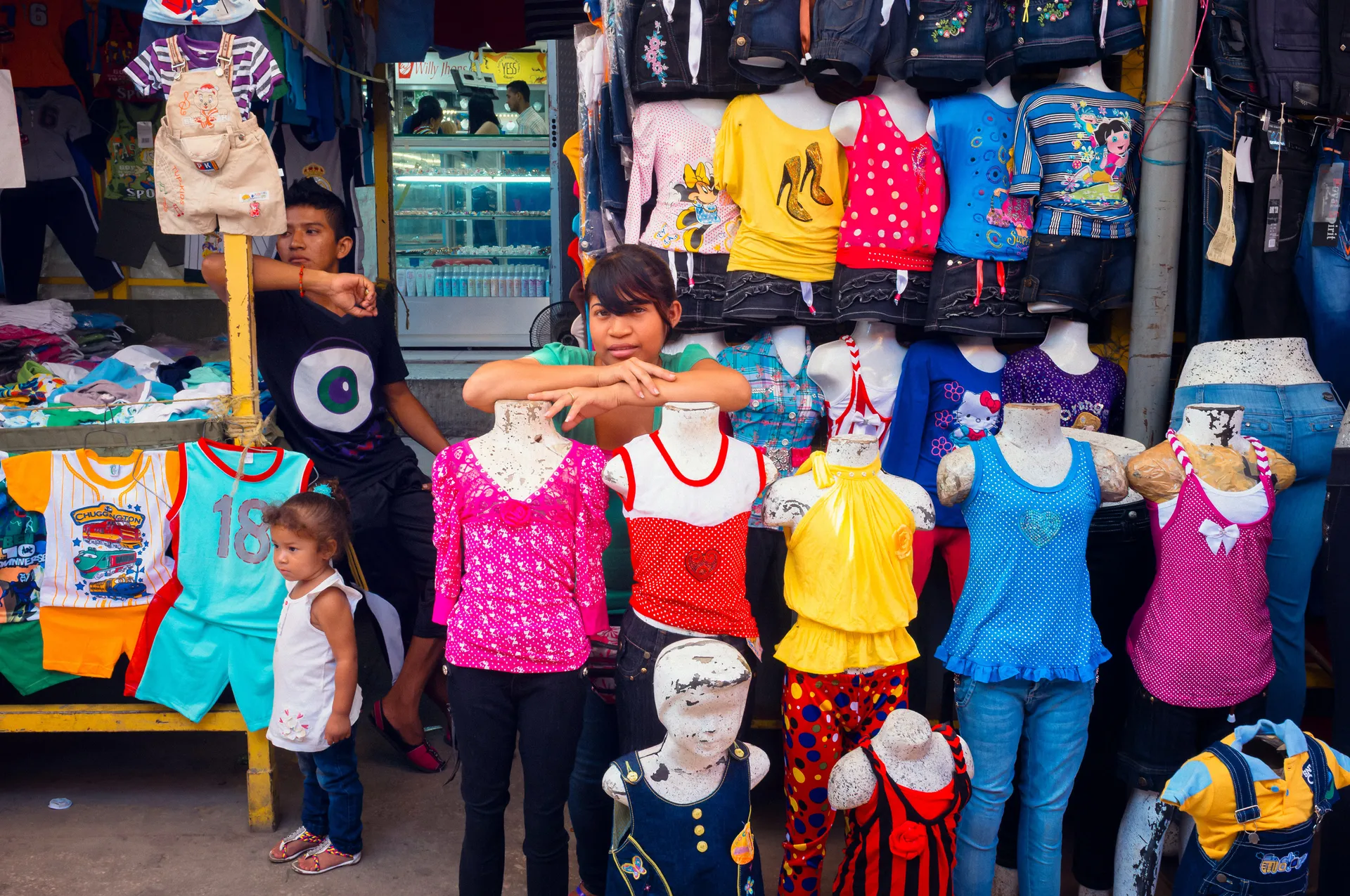
Maybe at six they'll take down the tarps. Maybe a girl will put the plaster heads away in a storeroom and the plastic bodies will be covered with mandala cloths. And in a dark shop window the orange reflection of an awning nobody looks at anymore will slowly fade.
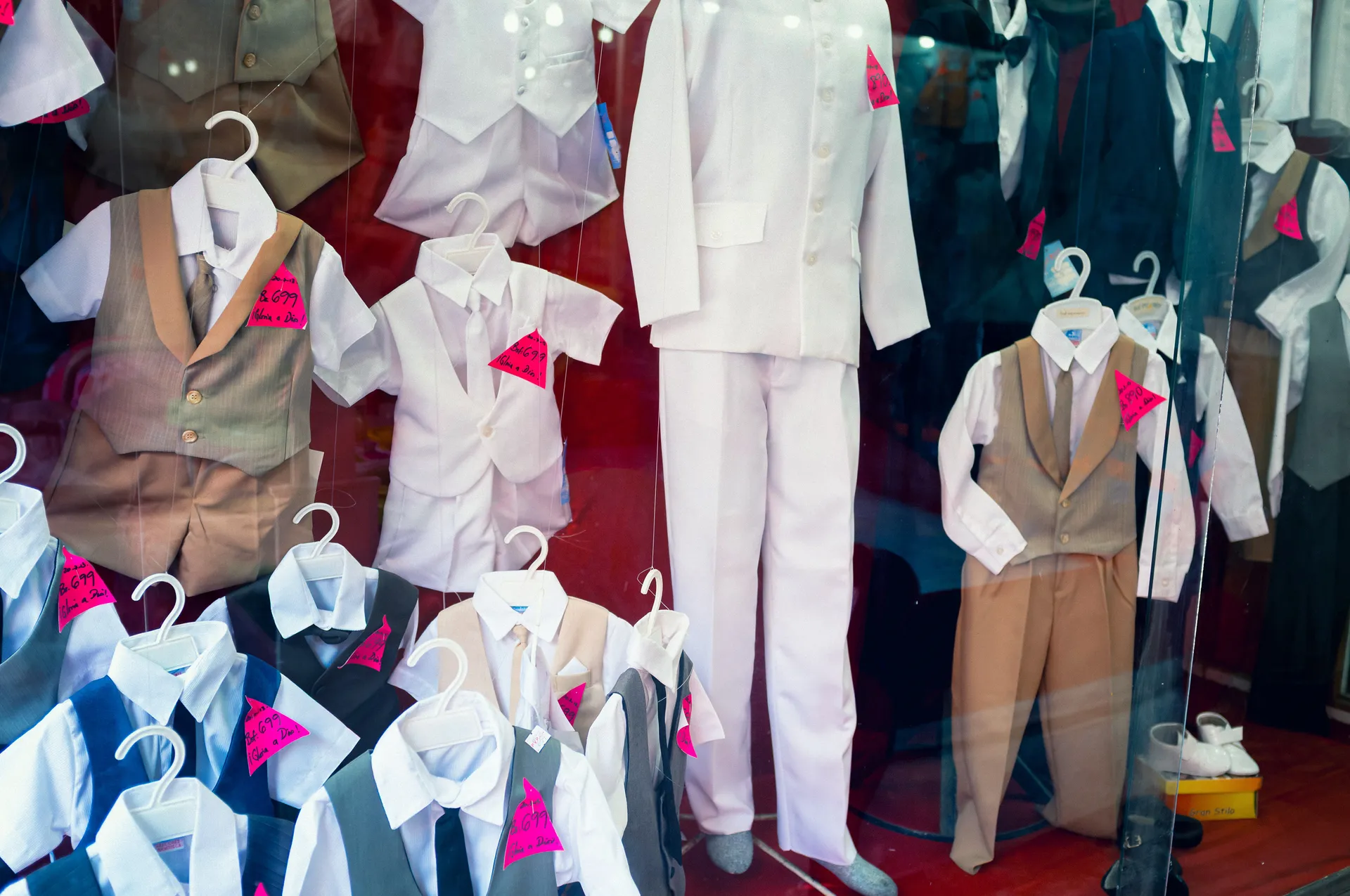
Inside, the city changes substance.
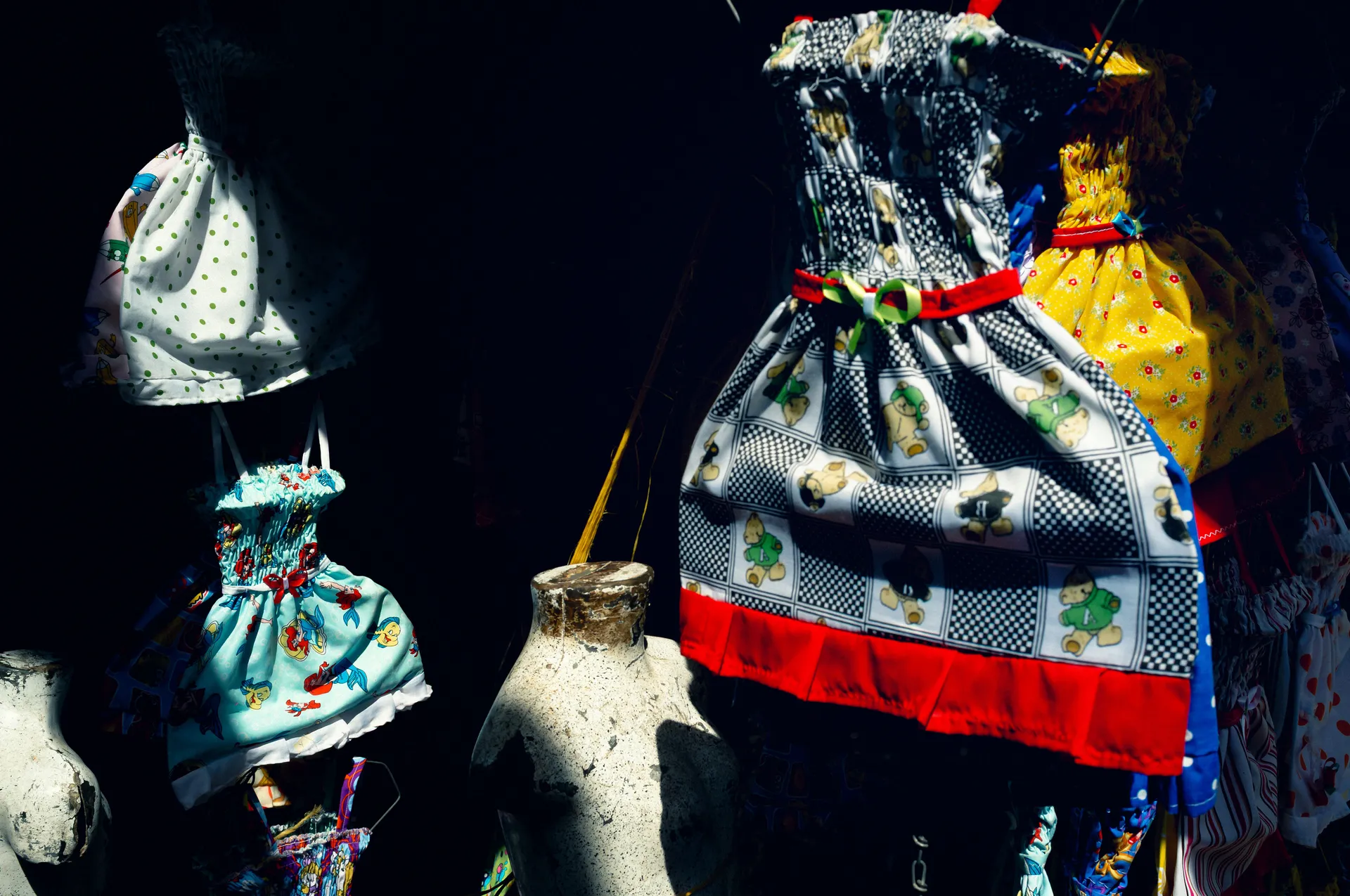
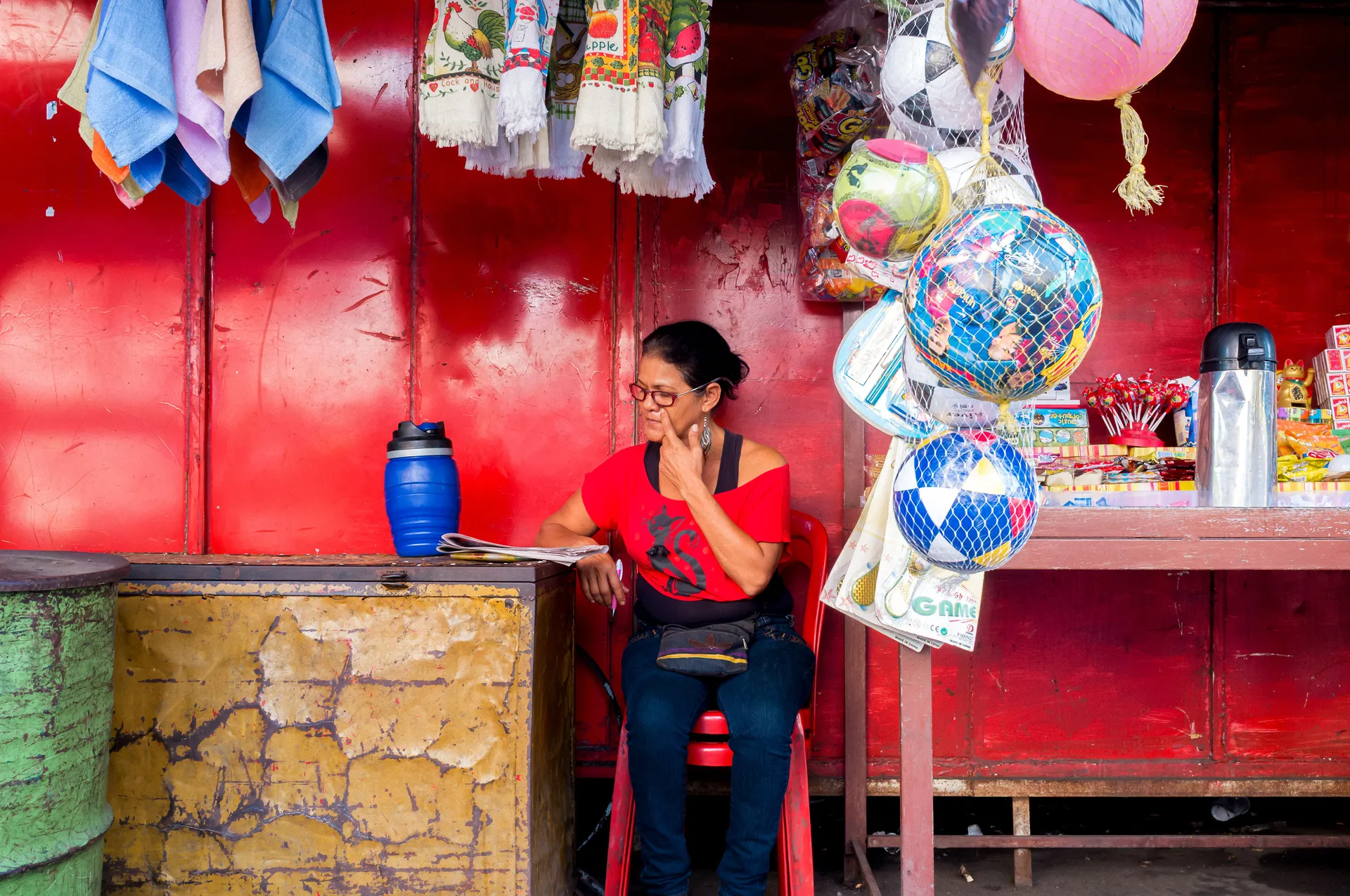
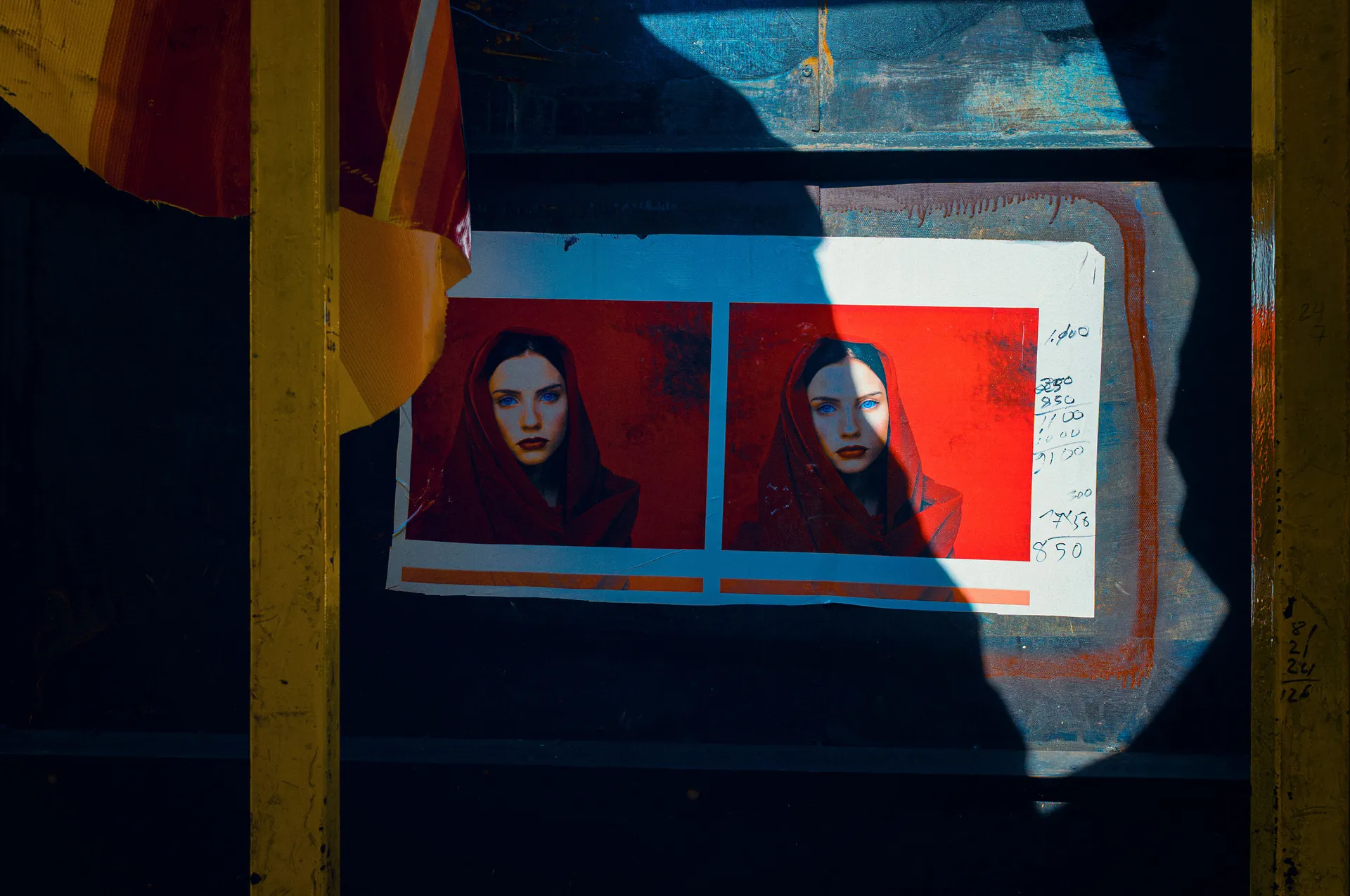
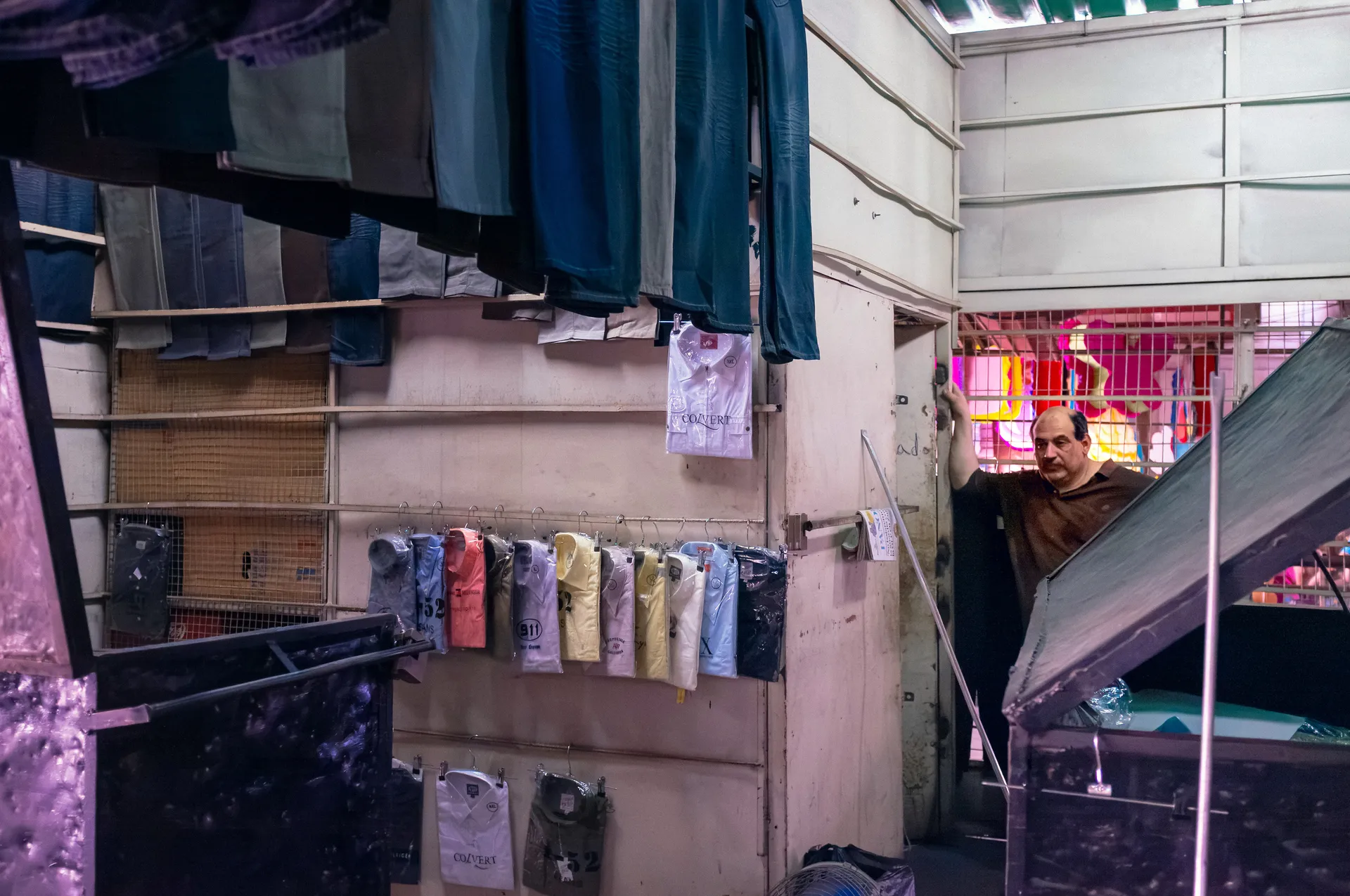
A roof of orange tarps filters the midday light and gives it back smelling of new plastic.
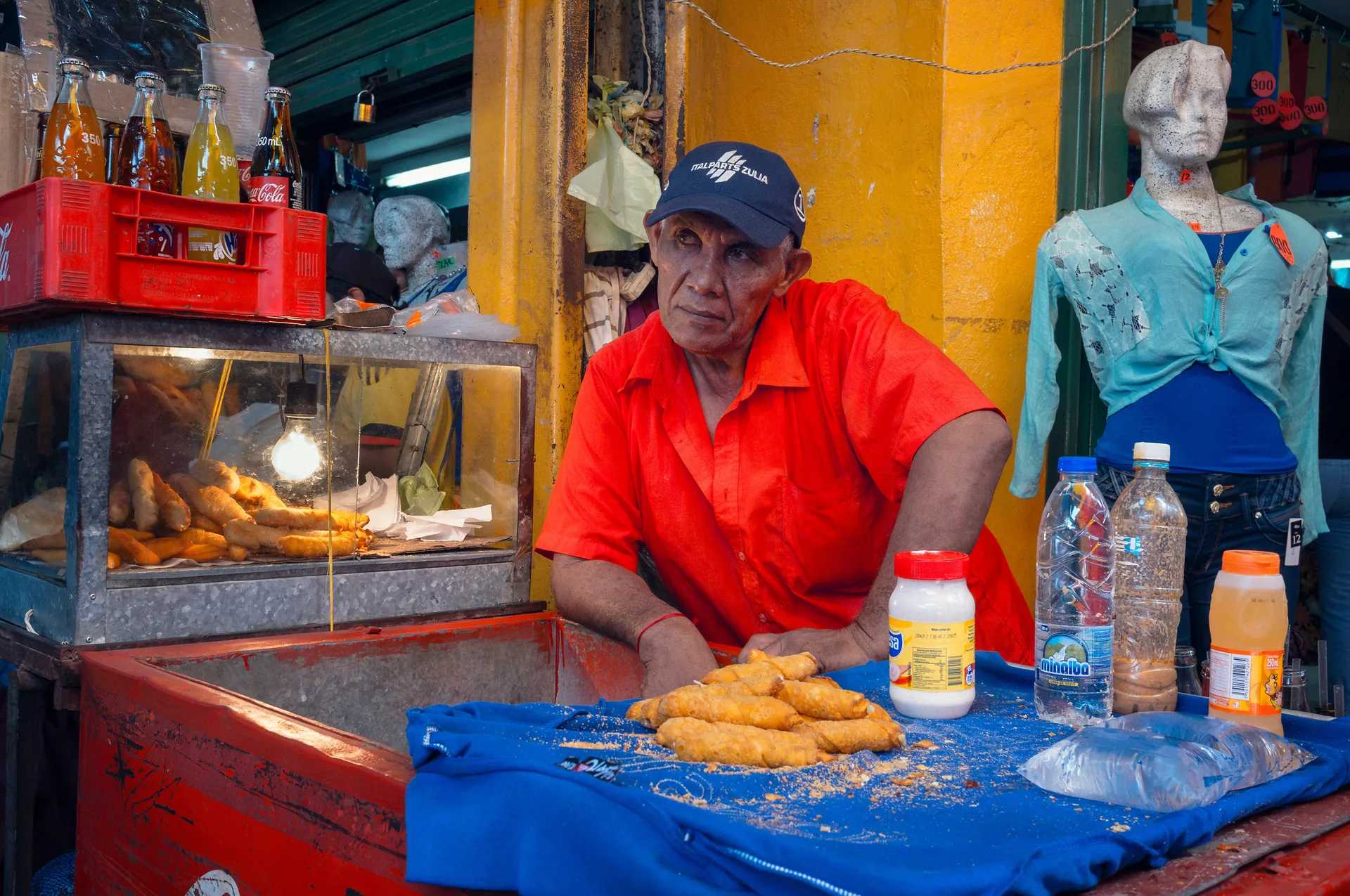
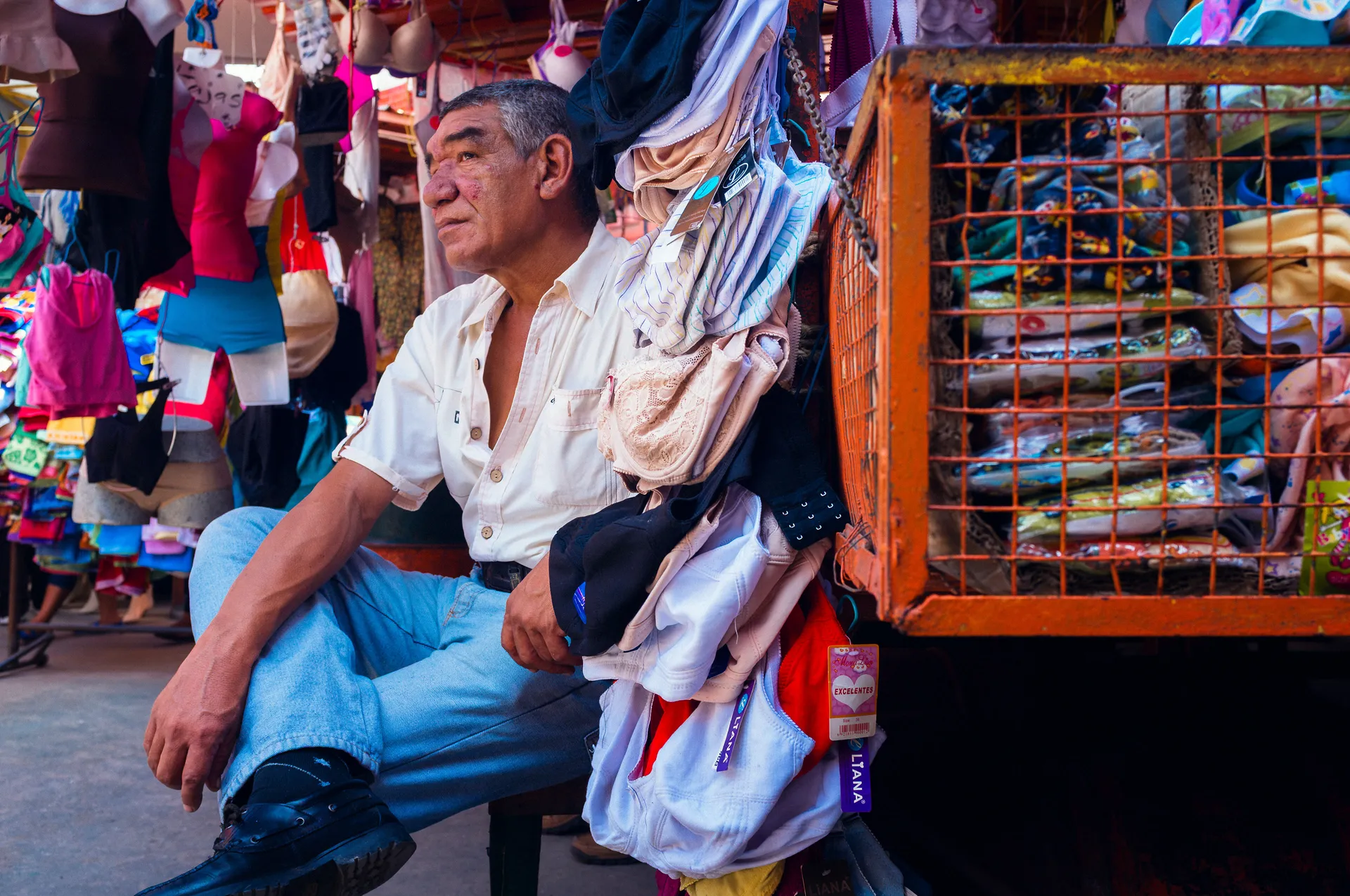
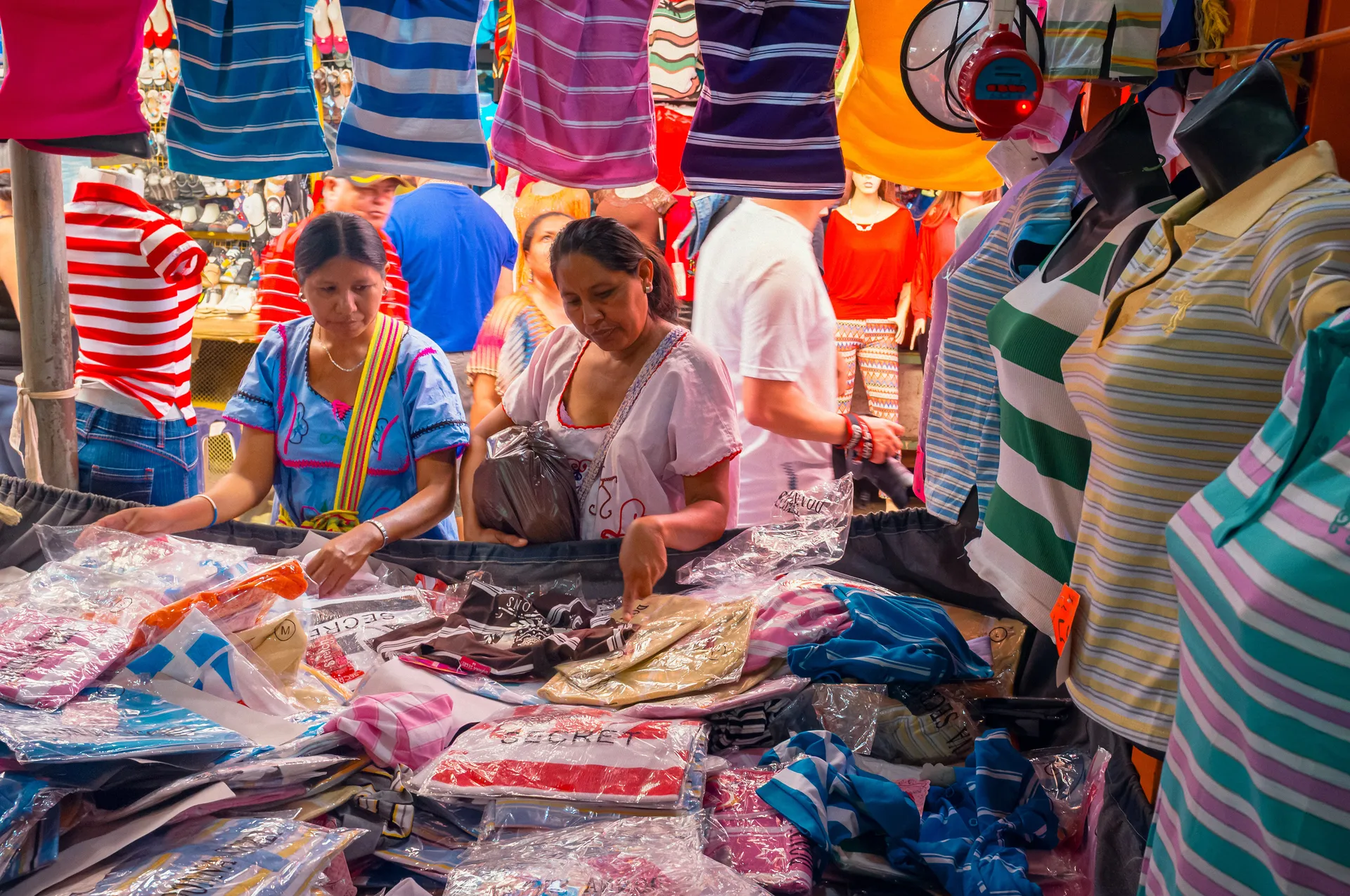
Hanging clothes draw the maze.
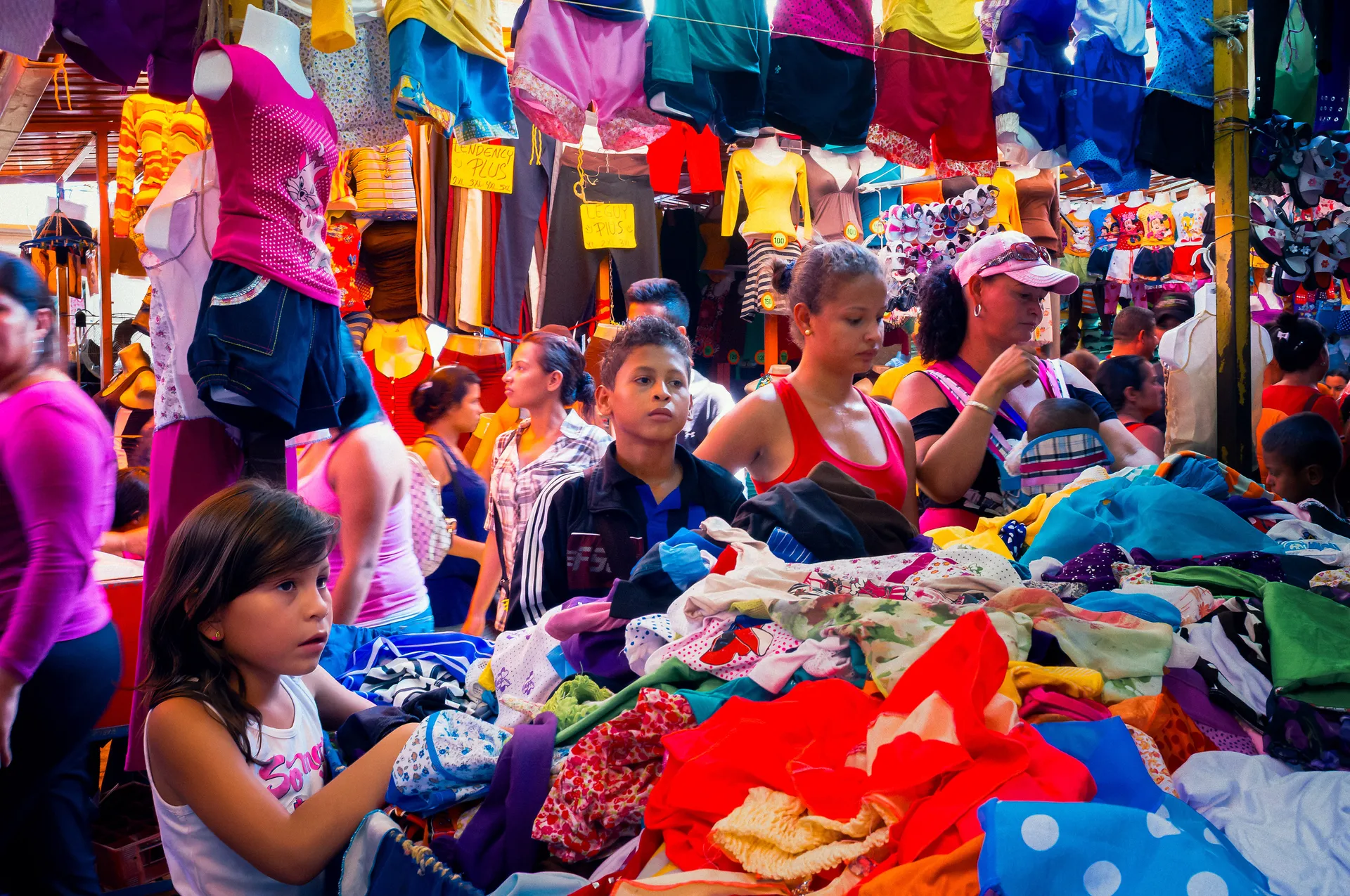
A la orden, mi amor, says a voice.
A la orden, mi amor, repeats another twelve steps further on.
 Next storyBefore the First Note: The MISO Season's Finale